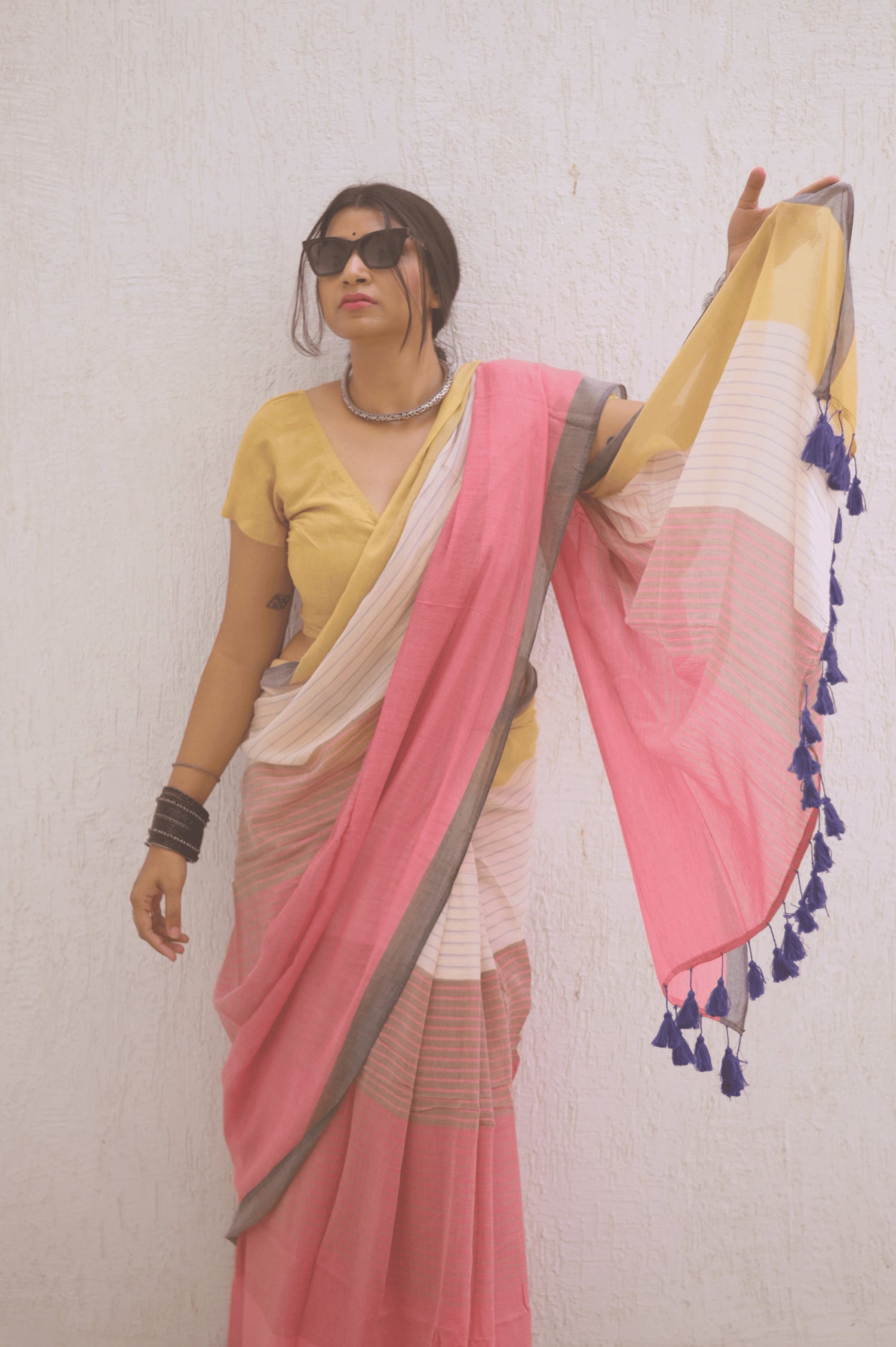


Tulsi Vivah Saree: What to Wear for Tulsi Vivah 2026, Colours and Fabrics

For Tulsi Vivah, wear a saree in red, yellow, green or pink, in a breathable fabric such as cotton or linen that lets you sit on the floor, bend to the tulsi pot and light lamps without fuss. In 2026 the festival falls on Saturday 21 November, with the ceremony usually held in the evening. Tulsi Vivah is the symbolic wedding of the tulsi (holy basil) plant to Vishnu, and it opens the Hindu wedding season, so many families dress as they would for a small home wedding: festive, but practical. Below: the date, what the ritual involves, which colours to choose and why, fabrics for the puja and the evening, customs in Maharashtra, Gujarat and north India, the blouse and jewellery, and how to stay safe around diyas.
Tulsi Vivah 2026: Date and Timing
Tulsi Vivah is held in the Hindu month of Kartik, in the bright fortnight, between Prabodhini (Dev Uthani) Ekadashi and Kartik Purnima. Panchang sources agree that in 2026 the main date in India is Saturday 21 November, Kartik Shukla Dwadashi. Prabodhini Ekadashi falls the day before, on Friday 20 November, and Kartik Purnima on Tuesday 24 November.
The day varies by region and family. Many households perform the wedding on Dwadashi, some on Ekadashi itself, and others on any evening up to Kartik Purnima. Outside India the date can shift by a day because of the time difference; some panchangs give Sunday 22 November for places such as Australia, New Zealand, Singapore and Malaysia, so check one set to your own city.
The ceremony itself is usually held in the evening, after a fast kept through the day. Published muhurat times differ by several minutes from one panchang to the next, so check your local panchang, family priest or temple for the exact window. For dressing, plan for a daytime fast and preparation, and an evening ritual by lamplight.
What Happens at a Tulsi Vivah
Tulsi Vivah is a full wedding in miniature. The tulsi plant is the bride and is seen as a form of Lakshmi. The groom is Vishnu, usually as a shaligram stone, a brass image or picture of Vishnu or Krishna, or sometimes an amla branch. Legend links the festival to Vrinda, a devoted wife who became the tulsi plant, and to the tradition that Vishnu, in the form of a shaligram, married her.
Practices differ from home to home, but the outline is broadly the same. Knowing it helps you dress, because it tells you how much you will sit, bend, walk and handle flame.
Tulsi Vivah marks the end of Chaturmas, the four months when Vishnu is believed to rest and weddings are not held. That is why it is seen as the start of the wedding season. In some families a couple acts as the bride's parents and performs the kanyadaan.
Auspicious Colours and Why
There is no single prescribed colour for the people attending. The colours that suit the day come from the ritual itself: the tulsi is dressed as a bride in red, and Vishnu is wrapped in yellow. Most families choose from the same palette, and follow their own customs on colours to avoid.
Many families prefer to avoid black and very dark shades at a puja, and some avoid all white. If you are unsure, ask the elder who leads the puja in your home. Colour also matters for photos: the ritual happens by lamplight, and mid-to-bright shades show up better than pastels in the evening. For more on choosing a puja colour across the year, see our pooja saree guide.
Fabrics for the Puja and the Evening
In late November, evenings turn cool in much of north India, while days can still be warm. You will spend the day preparing and fasting, then sit on the floor, bend to the tulsi pot and stand close to lit diyas. That makes fabric choice more practical than for a party.
If you are the one doing the puja, choose cotton or linen first. They let air through during a day of fasting and preparation, and they are what doctors recommend near open flame. If you are a guest at a society or temple celebration, you have more freedom, but the same rule about loose, floaty ends applies. Our Diwali saree guide covers the lamp-heavy festival days just before, and the pooja sarees collection gathers easy-care options.
Regional Customs: Maharashtra, Gujarat, North India
The core wedding is shared, but each region adds its own touches, and these can change what you wear and how long you stand or sit.
Maharashtra
In Maharashtra, Tulsi Vivah is performed much like a Marathi wedding and is often led by the women of the house. A white cloth, like the antarpat of a Marathi wedding, is held between the tulsi and Vishnu while the Mangal Ashtaka verses are recited, then rice mixed with vermilion is showered and the cloth is lowered. The day before, Prabodhini Ekadashi, draws Varkari pilgrims to the Vithoba temple at Pandharpur. If you want to dress the Maharashtrian way, see our guide to the nauvari saree, and the Marathi bridal look for the jewellery that often appears on a first Tulsi Vivah.
Gujarat
In Gujarat, temples stage the wedding on a large scale. At the Shamlaji temple the whole sequence is recreated, from the baraat to the vidaai, with the temple lit up and dancing. In Saurashtra, the image of the groom, called Lalji, is carried in a procession from one temple to the bride's temple, with bhajans sung through the night. If you are joining a temple procession or a night of bhajans, choose a fabric you can walk and sit in for hours, and comfortable footwear you can slip off at the temple.
North India
Across Uttar Pradesh, Bihar and neighbouring states, Dev Uthani Ekadashi is widely observed, and a canopy of sugarcane is built in many homes. The day also marks the start of the sugarcane harvest. In parts of Bihar the celebration, called Saunja, runs for three days, from Ekadashi to Trayodashi, with readings from the Ramcharitmanas or Ramayana, a procession and then the wedding itself. Evenings are cool by late November, so carry a shawl, and pick a fabric with some body, such as linen or a medium cotton.
What to Wear by Role
What suits you depends on what you will be doing. Three common roles, and a simple look for each:
For colour-by-colour styling beyond the festival, see the red saree look and yellow saree look guides.
Draping for Sitting, Bending and Walking the Rounds
The standard nivi drape works well for Tulsi Vivah with a few changes. Start as usual: tuck the plain end into your petticoat just to the right of your navel, wrap once, make the pleats and tuck them at the navel facing left, then take the pallu round your back and over your left shoulder.

Mul and cotton sarees can slip on a long day. Our guide on how to drape a mul cotton saree shows how to make the drape hold.
Blouse and Jewellery
A Tulsi Vivah blouse needs to let you raise your arms for the aarti and bend to the tulsi pot without strain. Elbow-length or three-quarter sleeves are practical and look traditional; they also keep bare skin away from the diya. Choose a round, boat or sweetheart neck in a comfortable depth, about 6 to 7 inches at the front.
Jewellery follows the wedding theme. Green and red glass bangles, a small gold or temple necklace, jhumkas and a bindi suit almost any of the four colours. Newly married women often wear their mangalsutra, sindoor and toe rings. Keep bangles to a few on each wrist when you light lamps, and take off long, dangling earrings or tassels if you cover your head with the pallu.

For more on balancing jewellery with fabric and neckline, see jewellery for saree.
Safety Near Diyas and Lamps
Tulsi Vivah is a lamp-lit ritual, often in a small courtyard, balcony or corner of the home, with several people close together. Burns doctors advise avoiding loose or synthetic clothing while lighting diyas and recommend cotton. A few habits make the evening safer.
Sarees for Tulsi Vivah
These MAYIN sarees fit the Tulsi Vivah palette and the practical needs of the day. Every MAYIN saree is 5.5 m long and 45 inches wide. Delivery in India is free on orders of ₹2,000 and above.
 Main EventBurgundy red pure handloom linen with zari borderPair with Gold, green
 ComposurePink pure handloom linen with zari borderPair with Gold, green
 On RepeatYellow handloom linen with zari borderPair with Red, maroon
 Regal Pin DropMaroon red polka dot modal cottonPair with Maroon, gold
 Mauve MelodyPlain pink mul modalPair with Pink, green
 Bright SideWhite mulmul cotton with yellow borderPair with Yellow, red
 AmélieRed floral print pure chiffonPair with Red, gold
 OreliaGreen floral print pure chiffonPair with Red, pink
Regal Pin Drop, a maroon polka dot mul modal saree at ₹2,499 with a 1 m running blouse piece, is a lighter red for a long day. More in red sarees and linen sarees.
Questions People Ask
When is Tulsi Vivah in 2026?
Panchang sources agree on Saturday 21 November 2026, Kartik Shukla Dwadashi. Some families hold it on Prabodhini Ekadashi, Friday 20 November, or on any evening up to Kartik Purnima on 24 November.
Is Tulsi Vivah done on Ekadashi or Dwadashi?
Both are followed. Many panchangs give Dwadashi as the main date, while some families and temples perform it on Ekadashi itself. Follow your family custom or local temple.
What time is Tulsi Vivah done?
Usually in the evening, after a fast kept through the day. Exact muhurat times vary slightly between panchangs, so check your local panchang or priest.
Which colour saree should I wear on Tulsi Vivah?
Red, yellow, green and pink are the usual choices. Red is the colour the tulsi bride wears, yellow is the colour of the cloth that wraps Vishnu, and green and pink sit well beside them.
Can we wear black on Tulsi Vivah?
Many families prefer to avoid black at a puja, and some avoid white too. Customs differ, so ask the elder who leads the puja at home.
What should I wear for Tulsi Vivah puja at home?
A cotton or linen saree in a festive colour, with elbow-length sleeves and the pallu pinned or tucked at the waist. It keeps you cool through the fast and is safest near lamps.
Can I wear a chiffon saree for Tulsi Vivah?
Yes, especially as a guest. Pin the pallu firmly and tuck its end at the waist when you go near diyas, because light, floaty fabric drifts easily.
How is the tulsi plant dressed for the wedding?
Usually in a red chunri or small saree, with bangles, a bindi, garlands, turmeric and vermilion, like a bride.
What is offered at Tulsi Vivah?
Seasonal produce such as sugarcane, amla, tamarind and sweet potato, with fruit and sweets or kheer as bhog. Sugarcane stalks are also used for the wedding canopy.
Why does Tulsi Vivah start the wedding season?
It comes at the end of Chaturmas, the four months when Vishnu is believed to rest and weddings are not held. Once Vishnu wakes and marries the tulsi, the season for weddings opens.
Can unmarried girls do Tulsi Vivah?
Customs vary, but in many homes the whole family takes part, and the ceremony is often led by women. In some regions girls fast on the day in the hope of a good life partner, while married women fast for a happy marriage.


