To drape a mul cotton saree so it stays neat all day, wear a snug cotton petticoat, iron the saree while slightly damp, make five to seven pleats about 4 to 5 inches wide, and pin the pleats and the pallu. Start from the plain end, tuck it at your right hip, wrap once, pleat, tuck the pleats at the navel, then take the pallu over your left shoulder. This guide walks through the nivi drape step by step, pallu styles, four other drapes that suit mul cotton, how different fabrics behave, where to pin, quick fixes and the common mistakes.
What you need
Cotton petticoatSnug, with a drawstring, in the saree’s colour or skin tone.
BlouseStitched and tried on before the day.
Four safety pinsSmall, sharp ones that will not snag.
Your shoesPut them on first; they decide the hem length.
An ironMul cotton pleats best when ironed slightly damp.
A mirrorFull length, so you can check the fall.
Know Your Saree
Every MAYIN saree is 5.5 m long and about 45 inches wide. One end is the pallu, the decorated end that goes over your shoulder; the other is the plain end, which you tuck in first. Our sarees come without a fall and pico, and mul cotton drapes well without them. If you prefer a heavier hem, a tailor can add a fall in a few minutes.

The Nivi Drape, Step by Step
Seven steps
1
Tuck in the plain endHold the plain end with the inner side facing you and tuck it into the petticoat at your right hip, a little to the right of your navel. The hem should just touch the top of your feet.
2
Wrap once aroundTake the saree around your waist from right to left, back to the front, tucking the top edge in as you go.
3
Measure the palluBring the rest of the saree up across your front and over your left shoulder, so the end falls to about the back of your knee.
4
Make the pleatsFrom the fabric left at the front, make five to seven pleats, each 4 to 5 inches wide. Keep the top edges together and the bottom edges level.
5
Pin and tuck the pleatsPin the pleats together near the top. Tuck them in at the navel, facing left, and pin them to the petticoat from the inside.
6
Settle the palluPleat the pallu for a neat look or leave it open, and pin it to the blouse at the left shoulder from the inside.
7
Check the fallSmooth the pleats so they fall straight, check the hem is even all around, and look at the back in a mirror.
Soft mul cotton holds narrower pleats better than wide ones, so keep them to 4 or 5 inches. Pressing the pleats firmly with your fingers before tucking helps them stay crisp.
Pallu Styles
Four ways to wear the pallu
Pleated and pinnedNeat and secure. Best for office, travel and long days.
OpenRelaxed and graceful. Best for parties and evenings.
WrappedBring the open pallu around the back and over the right arm. Warm on cool evenings.
Tucked at the waistBring the pallu end round and tuck it at the front. Practical for pujas and cooking.
Where to Pin
Four pins that keep it in place
1
Pleats togetherOne pin through all the pleats near the top, so they move as one.
2
Pleats to petticoatOne pin from the inside, so the pleats cannot slide out.
3
Pallu at the shoulderOne pin through the pallu and the blouse, from the inside.
4
Left waistOptional, for a busy day: one pin where the saree crosses the left hip.
How Each Fabric Drapes
Fabric by fabric
FabricHow it drapesTip
Mul cottonSoft and light, with a little natural creaseIron slightly damp; keep pleats narrow; pin well.
Mul modalSmooth and fluid, creases lessThe easiest for beginners; pleats fall cleanly.
Handloom linenStructured, with crisp foldsIron the pleats in; fewer, wider pleats suit it.
Pure chiffonLight and floatingPin carefully; five pleats are enough.
Cotton tissueStiff, with sheenPress the pleats with your fingers; it holds shape well.
Dhakai jamdaniFine, airy and slightly crispHandle the motifs gently and pin from the inside.
If you are new to draping, start with mul modal, such as Mauve Melody or True Garnet. It holds pleats easily and creases less than mul cotton. For more on the fabrics, read what is mul cotton and what is a chiffon saree.
Four Other Drapes to Try
Beyond the nivi
Bengali style
No front pleats: the saree is box-pleated loosely, the pallu goes over the left shoulder, comes back under the right arm and over the left shoulder again. Lovely for Durga Puja.
Gujarati style
Pleat and tuck as for nivi, but take the pallu from the back over the right shoulder so it falls across the front. Shows off a decorated pallu.
Butterfly drape
Pleats tucked lower, below the navel, and a very thin pleated pallu. A modern party look.
Belted drape
A nivi drape with a belt over the pallu at the waist. Holds everything in place and looks contemporary.
Which Drape for Which Day
Drape by occasion
Office
Nivi with a pleated, pinned pallu. Neat and secure through meetings and the commute.
Festivals and pujas
Nivi with the pallu tucked at the waist, or the Bengali drape for Durga Puja.
Parties
Nivi with an open pallu, or the butterfly drape.
Travel and long days
A belted drape, so nothing shifts.
Tips for Your Height
Small adjustments that help
PetiteKeep the hem just touching the floor in your shoes, use narrower pleats, and a slimmer pleated pallu.
TallYou can afford wider pleats and a longer, open pallu. Keep the hem at the top of your feet.
Fuller waistTuck the pleats slightly to the left of the navel and keep them flat; a pleated pallu falls cleanly over the front.
Quick Fixes
Problem and fix
ProblemFix
Pleats keep openingPin them together and to the petticoat. Iron the saree slightly damp next time.
The saree slips downTighten the petticoat drawstring. A cotton petticoat grips better than a synthetic one.
Hem is unevenUntuck the first wrap and lift or lower it all the way round.
Pallu slides off the shoulderPin it to the blouse from the inside, through a blouse seam.
Too much bulk at the waistMake fewer, flatter pleats and tuck the top edge in neatly.
Creases by middayA quick smooth of the pleats is enough. For fewer creases, choose mul modal.
Mistakes to Avoid
- Starting with the pallu end. Always tuck the plain end first.
- Setting the hem barefoot and then wearing heels.
- A slippery or loose petticoat. It is the most common reason a drape comes undone.
- Too many wide pleats in soft mul cotton. They collapse; keep them narrow.
- Pins on the outside. Pin from the inside so they do not show or snag.
Good Sarees to Learn On
Plain mul cotton and mul modal sarees are the easiest to learn on, because there is no border or print to line up. Try After Dark, Olive Oasis or Lilac Blush. Once you are confident, a checked saree such as Harvest Sun is good practice for keeping pleats even.
Shop easy-to-drape sarees
See all our mul cotton sarees and mul modal sarees. For the base, read our petticoat guide, and for blouses, blouse designs for plain cotton sarees.
Questions People Ask
How many pleats should a cotton saree have?
Five to seven, each about 4 to 5 inches wide. Soft mul cotton holds narrow pleats better than wide ones.
How do I stop my cotton saree pleats from opening?
Iron the saree slightly damp, press the pleats with your fingers, and pin them together and to the petticoat before tucking.
How many pins do I need?
Three is enough for most days: pleats together, pleats to petticoat, and pallu at the shoulder. Add one at the left waist for a busy day.
Which end of the saree do I tuck first?
The plain end. The pallu is the decorated end that goes over your shoulder.
How long should the pallu be?
About to the back of your knee in a nivi drape. Shorter for a busy day, longer for an open party pallu.
Do I need a fall on a mul cotton saree?
No. Mul cotton drapes well without one. A tailor can add one if you prefer a heavier hem.
Which petticoat is best for draping a cotton saree?
A snug cotton petticoat with a drawstring, in the saree’s colour or skin tone.
Which saree is easiest for a beginner?
A plain mul modal. It is smooth, holds pleats easily and creases less.
How long does it take to drape a saree?
Fifteen minutes the first few times. With practice, most people manage in five to ten.
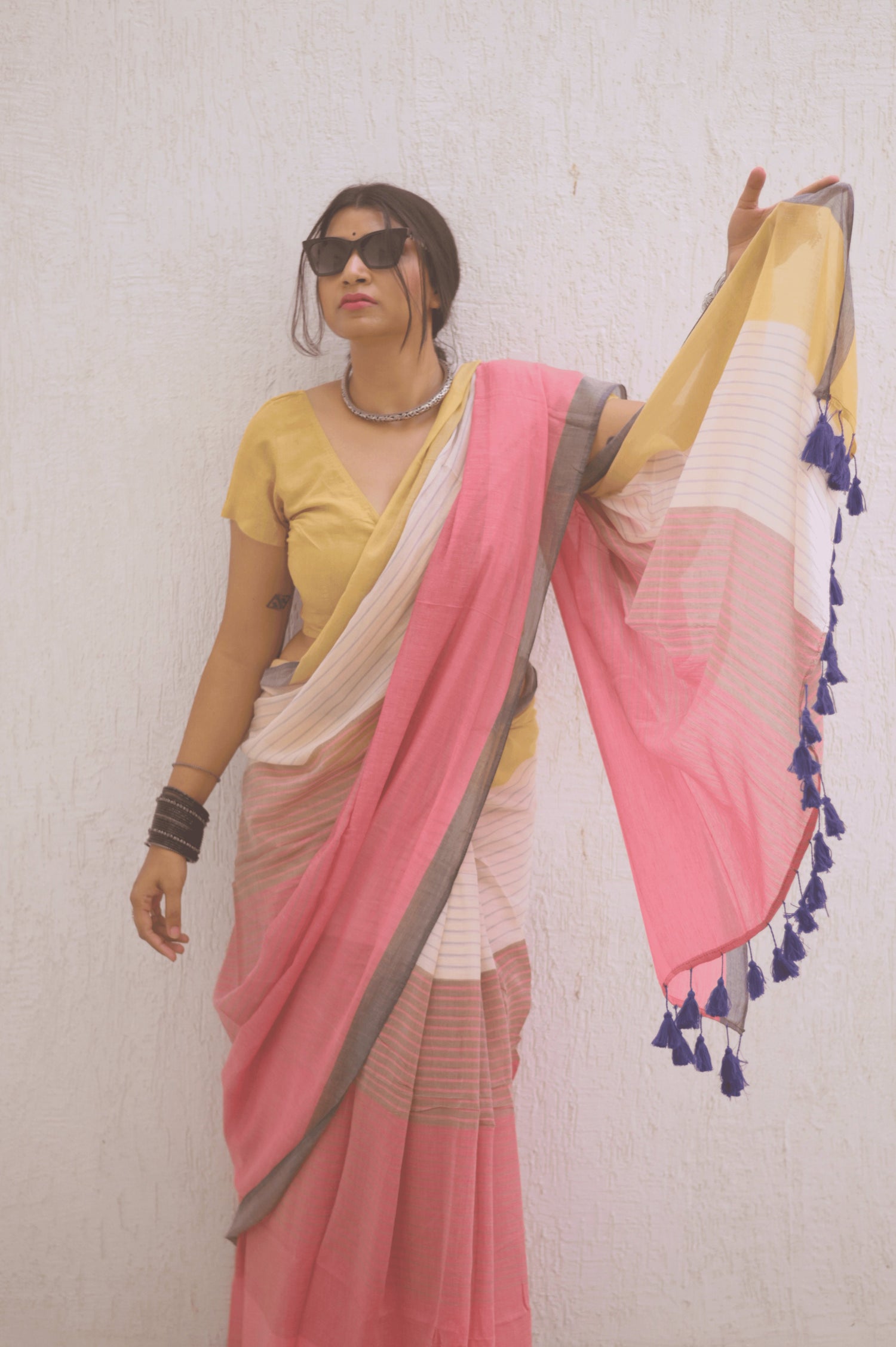


 Mauve MelodyPlain pink mul modalPair with
  True GarnetPlain maroon mul modalPair with
  After DarkPlain black mul cottonPair with
  Olive OasisPlain olive mul cottonPair with
  Lilac BlushPlain lilac mul cottonPair with
  Twilight BloomPlain deep violet mul cottonPair with
  Cobalt CrumblePlain blue mul cottonPair with
  Mint MeadowPlain mint mul cottonPair with


