Jamdani Sarees: Original Dhakai Jamdani in Soft Cotton Muslin
-
Sage - Green Floral Original Dhakai Jamdani Saree
Regular price ₹ 4,999.00Regular priceUnit price / per₹ 8,499.00Sale price ₹ 4,999.00Buy Any 2 at ₹ 4,499 each
-
The handwoven jamdani difference
Woven by hand, motif by motif
- Motifs Float on a sheer ground Power loom: flat and identical
- The back Neat, threads tucked in Power loom: long loose threads
- Each piece Small hand-made variations Power loom: machine-even
Turn the pallu over: the back tells you How to tell →
Trusted by 10,000+ Customers
Bestsellers For a Reason
-
Azura - Royal Blue Floral Print Pure Chiffon Partywear Saree
Regular price ₹ 3,999.00Regular priceUnit price / per₹ 7,999.00Sale price ₹ 3,999.00Buy Any 2 at ₹ 3,599 each
-
Mauve Melody - Plain Pink Mul Modal Saree
Regular price ₹ 1,899.00Regular priceUnit price / per₹ 2,799.00Sale price ₹ 1,899.00Buy Any 2 at ₹ 1,709 each
-
After Dark - Plain Black Mul Cotton Saree
Regular price ₹ 1,699.00Regular priceUnit price / per₹ 2,499.00Sale price ₹ 1,699.00Buy Any 2 at ₹ 1,529 each
-
Vintage Aqua - Green Floral Printed & Embroidered Chiffon Partywear Saree
Regular price ₹ 3,499.00Regular priceUnit price / per₹ 5,999.00Sale price ₹ 3,499.00Buy Any 2 at ₹ 3,149 each
Shop By Occasion
-
Daily Wear
Daily Wear Sarees: Comfortable, Easy, Everyday The Daily Wear Edit Experience all-day...
-
Office Sarees
Professional Office Wear Sarees: The Modern Workwear Edit Welcome to MAYIN's workwear...
-
Party Wear Sarees
Party Wear Sarees That Move With You A party wear saree should...
-
Wedding Sarees
Sarees for Every Wedding Function A wedding is several days of functions,...
-
Haldi Sarees
Haldi Sarees: What to Wear to a Haldi Ceremony A haldi saree...
-
Mehendi Sarees
Mehendi Sarees in Mehndi Colour and Green Mehndi colour is the olive...
Frequently Asked Questions
How can I tell an original Dhakai jamdani saree?
Check the back. A handwoven jamdani is almost as neat on the reverse as on the front, with the motif threads tucked in at each motif. Long loose threads across the back, identical motifs and a shiny, machine-regular finish usually point to a powerloom copy.
What is the price of a jamdani saree?
Handwoven jamdani prices depend on the yarn, the fineness of the weave and how dense the motifs are, since each motif is laid in by hand. Lilac Bloom and Naples, our lavender and yellow original Dhakai jamdanis in cotton muslin, are ₹4,999 each.
Is jamdani a handloom weave?
Yes. Jamdani is a handloom technique: each motif is inlaid by hand with an extra weft thread as the cloth is woven. Machine copies imitate the look with jacquard weaving or printing.
What is the difference between Dhakai jamdani and other jamdani sarees?
Dhakai jamdani is known for a fine, sheer cotton ground with delicate, closely placed motifs. Jamdani woven in West Bengal, around Shantipur and Phulia, has its own motif styles and weights of cotton, and Uppada in Andhra Pradesh uses the jamdani technique in its own way.
Is a muslin jamdani saree see-through?
Muslin jamdani is light and semi-sheer. Match the petticoat to the saree where you can; if you have no match on a light saree, nude usually shows less than white.
Which occasions suit a jamdani saree?
Durga Puja and other pujas, day weddings, festive mornings, cultural events and smart office days. A black jamdani with light motifs also works for an evening.
Do you have a black jamdani saree?
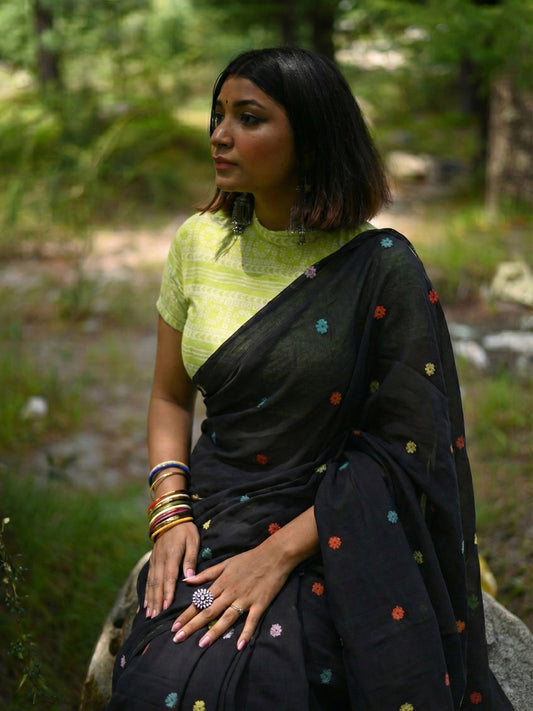
Yes. Bloom is a black floral original Dhakai jamdani in cotton muslin; the light motifs on a black ground suit an evening as well as a Puja day.
Is a cotton jamdani saree good for office wear?
Yes. It is light and breathable, and woven florals look polished without being loud. Softer colours and simple jewellery keep it right for work.
How do I care for a jamdani saree?
Dry clean it to protect the woven motifs and the fine muslin ground. Store it folded in cotton rather than plastic, and refold it every few months.
Jamdani Sarees, Woven Motif by Motif
A jamdani is a handloom weave in which the motifs are woven into the cloth, not printed or embroidered on top. As the plain ground is woven, the weaver inlays an extra, thicker weft thread by hand, only where each flower or vine falls, then cuts and tucks it at the edge of the motif. Row by row, the pattern seems to float on a sheer ground. That is why a handwoven jamdani takes so long to make, while the fine, sheer ground keeps it light.
What Dhakai Jamdani Means
Jamdani grew up in the muslin weaving tradition of Bengal, centred on Dhaka, and "Dhakai" describes the style and technique as much as the place: fine cotton, a sheer ground and delicate, closely placed motifs. In India the tradition continues in West Bengal weaving centres such as Shantipur and Phulia, and Uppada in Andhra Pradesh uses the jamdani technique in its own style. Read more in what is a Dhakai jamdani saree.
Our Dhakai Jamdani Sarees
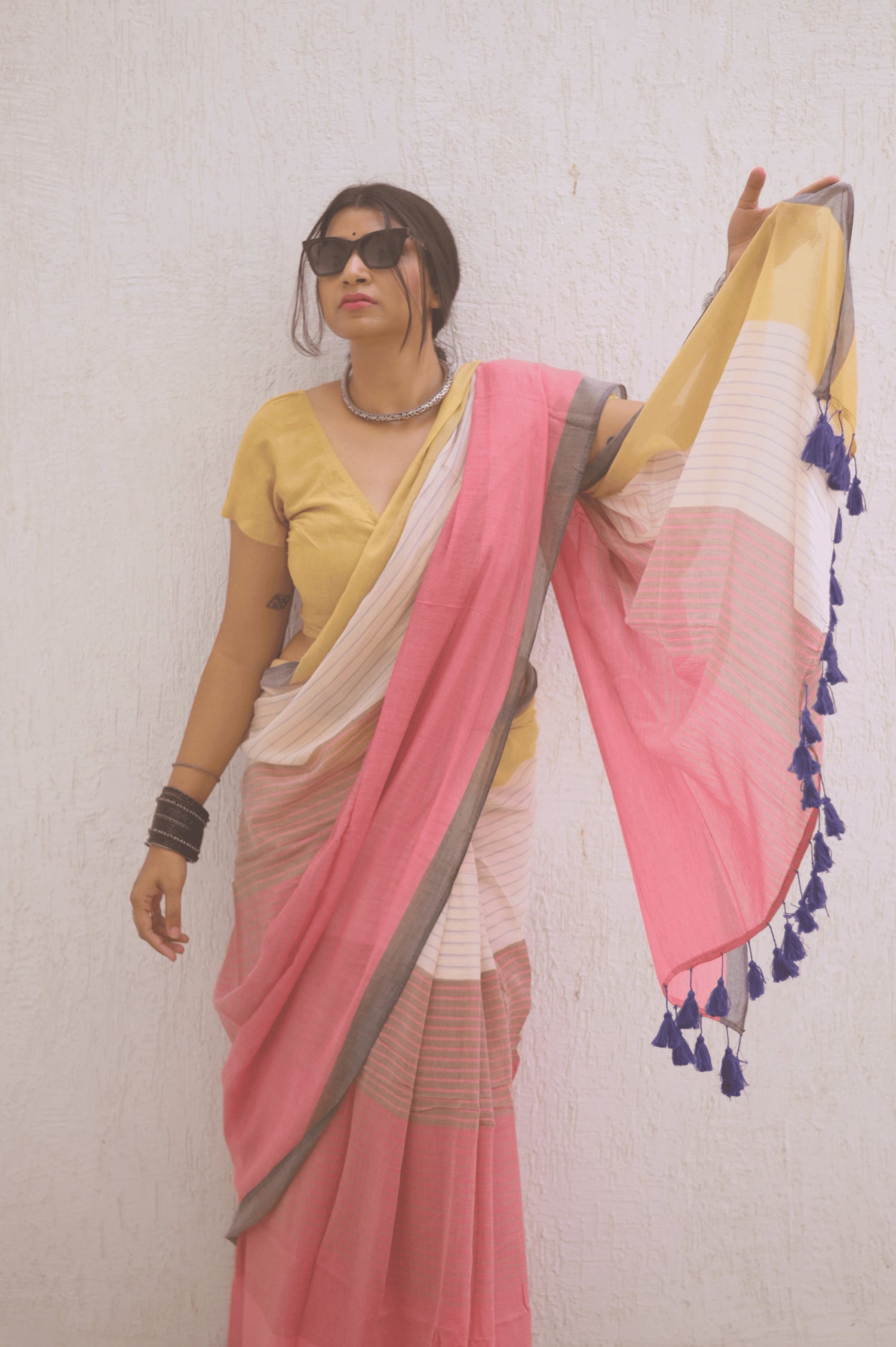
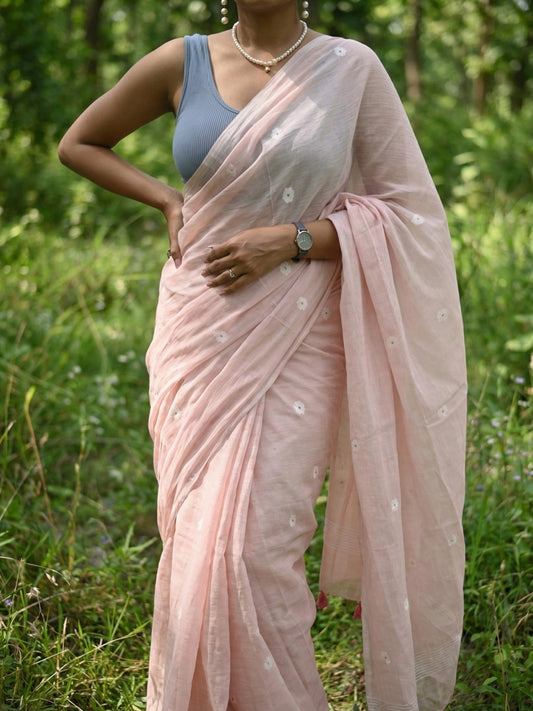
Our jamdani sarees are original Dhakai jamdani, handwoven in soft cotton muslin with floral motifs inlaid on the loom. Lilac Bloom in lavender and Naples in yellow have woven florals and are ₹4,999 each. Bloom is a black floral, Sage a green floral and Feather Pink a floral original Dhakai jamdani. Jamdani is slow to weave, so each design comes in small numbers. Like every MAYIN saree, each is 5.5 m long and 45 inches wide.
Muslin Jamdani and Cotton Jamdani
Muslin jamdani is the finest and most sheer: a soft, airy drape for daytime functions, pujas and warm-weather weddings. A cotton jamdani on a denser ground is crisper and suits long office days. Ours sit on the soft muslin side, so match the petticoat to the saree where you can; if you have no match on a light saree, nude usually shows less than white. For more light cotton weaves, see our cotton sarees.
How to Tell a Handwoven Jamdani
Turn the saree over. In a handwoven jamdani the back is almost as tidy as the front, because the motif threads are tucked in at each motif rather than carried across. Powerloom and jacquard copies usually show long loose threads floating across the back between motifs, perfectly identical motifs and a flat, regular finish, and some are woven in synthetic blends with a slight shine. Small differences from one motif to the next are a sign of hand weaving.
When to Wear a Jamdani
A jamdani suits Durga Puja and other pujas, festive mornings, day weddings, cultural evenings and smart office days; in many Bengali families a jamdani is a favourite for Puja mornings. A black jamdani such as Bloom also works for an evening. Pair it with a plain cotton blouse in white, ivory or the saree's base colour, keep jewellery light, and wear smooth flats or sandals so nothing catches the motifs. See jewellery for saree and footwear for saree, or browse festive wear sarees.
Caring for Your Jamdani
Dry clean your jamdani to keep the woven motifs crisp and the muslin ground even. Iron on the reverse at medium heat so the motifs are not flattened. Store it folded in a cotton or muslin bag rather than plastic, and refold it along new lines every few months.
More Handloom and Heritage Weaves
Explore our handloom sarees for handloom linen and tissue, traditional sarees for heritage looks, and white sarees and floral sarees for more light, festive drapes.