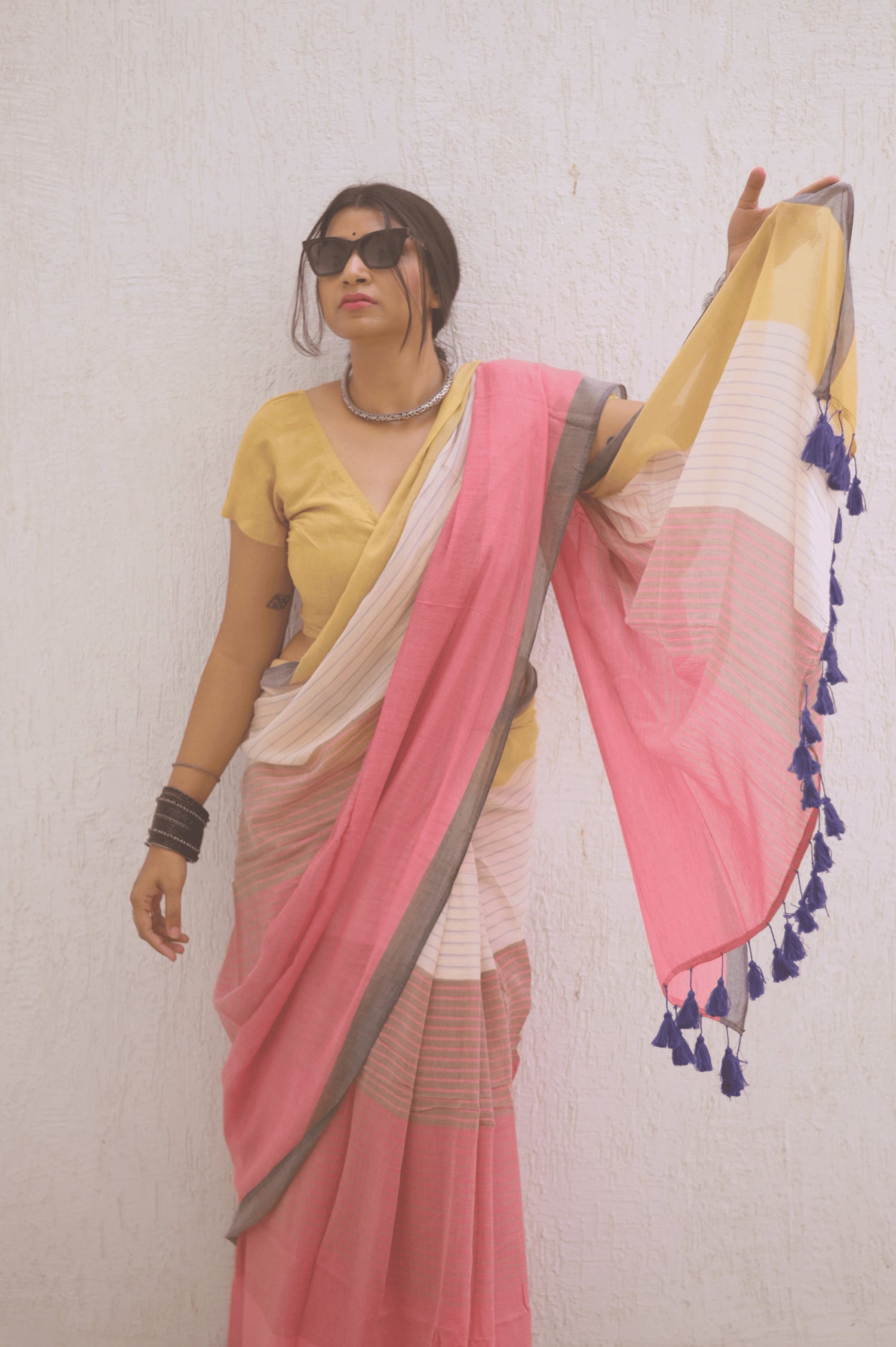


Lycra Saree: What It Is, How It Drapes, Blouse, Styling and Care

A lycra saree is a saree woven or knitted from a synthetic base, usually polyester, nylon or viscose, with a small amount of stretch fibre (lycra, also called spandex or elastane) blended in. The stretch makes it cling and spring back, so it drapes close to the body, hardly creases and suits ready to wear and pre-stitched styles. Below: what the fibre is, how to read a lycra blend label, how stretch changes pleats and pallu, how it feels in Indian heat, how it compares with chiffon, georgette and crepe, who it suits, the blouse and base layers, styling, and how to wash it without ruining the stretch.
What a Lycra Saree Is
"Lycra" is a trade name for spandex, a synthetic stretch fibre. In Europe it is usually called elastane, in North America spandex, and in India the trade name has become the everyday word for any stretchy saree fabric. The fibre was invented by the chemist Joseph Shivers in 1958 and first produced commercially in 1959. It is made mostly of polyurethane, arranged in alternating rigid and flexible segments, which is why it can stretch to roughly five times its length or more and then return to shape.
A saree is never made of spandex alone. The stretch fibre is blended in as a small part of the yarn or fabric, and the main fibre gives the saree its look: shine, sheerness, weight and feel. So a "lycra saree" is really a polyester, nylon or viscose saree with stretch. Most are sold as party and occasion sarees, often with a shimmer or metallic finish, sequins, foil prints or a stitched-on border.
Because it is synthetic, a lycra saree has nothing to do with handloom. It is made in mills on knitting machines or power looms, and it is usually one of the more affordable ways to get a fitted, glossy party look.
Lycra Blends and How to Read the Label
Two sarees both sold as "lycra" can feel completely different, because the base fibre matters far more than the stretch. Check the fibre content on the tag or in the listing before you buy.
The share of stretch fibre is usually small, and the label tells you how much. A higher share gives a closer, firmer fit, much like a pair of leggings; a lower share gives just enough give to move comfortably. If a listing only says "lycra fabric" with no fibre content, ask the seller.
How Stretch Changes the Drape
Stretch changes three things: how the saree falls, how the pleats behave and how it moves when you walk. A lycra saree falls straight down and hugs the hips and thighs, more like a gown than a crisp cotton saree. It does not hold a sharp fold, so pleats look soft and rounded rather than knife-edged. It recovers from creases on its own, so it still looks neat after a long car journey or hours of sitting.
The same stretch makes it slippery to drape. Pleats spring open, the tuck can work loose, and the pallu slides off the shoulder. A few habits help.
For the full nivi drape step by step see our guide to wearing a saree; the method for a slippery chiffon is close to lycra, and our chiffon draping guide covers pinning in more detail.
Ready to Wear and Pre-Stitched Lycra Sarees
Lycra is one of the most common fabrics for ready to wear sarees because stretch solves the hardest part of pre-stitching: fit. A stitched skirt with an elastic or stretch waistband can be pulled on and still sit smoothly over the hips, and stitched pleats stay in place because the fabric does not need to be tucked tight. Belted, ruffled and draped-gown styles are often made in lycra for the same reason.
Our guide to pre-draped and ready to wear sarees covers the styles, sizing and how to put one on. With lycra in particular, keep these points in mind.
Stretch makes sizing more forgiving, not unlimited. Go by your hip measurement rather than your waist if you are between sizes, since the skirt has to pass over the hips and still lie flat without stretching thin.
Comfort in Heat and Humidity
This is the question most people ask, and the honest answer is that it depends on the base fibre more than the lycra. Fibres are compared by how much moisture they hold from the air. Polyester holds very little, about 0.4 percent of its weight. Nylon holds about 4 to 4.5 percent. Cotton holds roughly 7 to 8.5 percent, and viscose about 11 to 13 percent. A fabric that takes up little moisture tends to leave sweat sitting on the skin, which is why polyester and nylon lycra often feel sticky in an Indian summer.
A close fit also traps warmth, because air cannot move between the saree and your body. So for an outdoor day function in May, a lycra saree is usually not the comfortable choice. It works better in air conditioned venues, evening events, cooler months and travel, where its crease resistance matters more than breathability. For hot weather fabrics, see our summer wedding saree guide and the summer sarees collection.
In the rains the picture is different. Synthetic lycra dries quickly and does not go limp when damp, so it can be practical for a rainy day function. Our monsoon saree guide covers fabrics for the rains.
Lycra vs Chiffon, Georgette and Crepe
These four fabrics are often shown side by side for party wear, and today all four are mostly made from synthetic fibres. They differ in sheerness, texture and stretch. Chiffon is very sheer and light, with a floating fall. Georgette is grainier, with a slight crinkle, a little less sheer and with more body. Crepe is a family of fabrics with a pebbly surface from tightly twisted yarn, usually opaque. Lycra is the only one with real stretch.
If you like the close, liquid fall of lycra but want something that breathes better, a soft chiffon or a fine mul modal is the nearest lighter alternative. For more on each, see what a chiffon saree is, our georgette saree guide and our crepe saree guide. The saree fabric guide compares the wider range.
Who a Lycra Saree Suits
Lycra suits anyone who wants a fitted, modern outline and easy movement. Because it follows the body, the question is less about size and more about how much shape you want to show.
For more on fabric and drape by shape, see saree for body type and saree for plus size. For expecting mothers, our baby shower and pregnancy saree guide covers safe drapes.
Blouse, Petticoat and Shapewear
The blouse
Many lycra sarees come with a stretch blouse piece in the same fabric, or with a ready stitched stretch blouse. Stretch fabric is forgiving to fit, but it still needs good tailoring, because a tight stretch blouse shows every seam and strap.
Sleeveless, halter, off-shoulder and corset blouses suit the fitted look of lycra. A contrast blouse in a heavier fabric, such as a sequinned or brocade blouse, also works well with a plain shimmer saree. Our readymade blouse guide covers sizes, and the blouse measurement guide covers taking your own.
Petticoat and shapewear
A standard cotton petticoat can bunch up under a clinging saree and show as ridges. A fitted mermaid or flared saree shapewear in a matching colour gives a smooth line from waist to knee and grips the tuck better. If you prefer a petticoat, choose a straight cut in a thin fabric. See our saree shapewear guide and saree petticoat guide for the options.
Styling and Occasions
Lycra sarees lean towards evening and party looks. A few rules keep the look polished rather than costume-like.
For more jewellery and hair ideas, see hairstyles for saree. For more party fabrics, browse our party wear sarees and sequin sarees.
Washing, Drying and Ironing
Spandex is strong but sensitive to heat, chlorine and rough handling, which break down its stretch. A lycra saree that has lost its stretch looks baggy at the hips and puckers at the seams. Always follow the care label first. Sarees with sequins, foil, stone work or a stitched border are usually dry clean only.
Over the years, elastane can stiffen and lose shape, even when stored well. That is normal ageing of the fibre, not a fault. For general pressing tips see how to iron a saree, and for keeping sarees crease free on the go see our crease free saree care guide.
Sarees in This Guide
The sarees below are not lycra. If you like the close, fluid fall of lycra but want a lighter, airier feel, these are the nearest alternatives. The chiffons drape softly and catch the light; the sequin ones give a shimmer evening look. The mul modal sarees fall smooth and close and feel cool in the heat. Each MAYIN saree is 5.5 m long and 45 inches wide.
 MuseBlue sequin chiffonPair with Silver, navy
 SolenneLavender floral print pure chiffonPair with Lavender, silver
 FlorinaNavy blue floral print pure chiffonPair with Navy, silver
 Mauve MelodyPlain pink mul modalPair with Pink, gold
 SocialiteOld rose sequin chiffonPair with Gold, maroon
 Dusty RosePlain peach mul modalPair with Peach, gold
Solenne and Florina are printed pure chiffon sarees, and Muse and Socialite are sequinned chiffon. All four come with a 1 m crepe blouse piece and are dry clean only. Muse and Socialite are ₹3,499, Solenne ₹3,399 and Florina ₹3,999. Mauve Melody and Dusty Rose are plain mul modal sarees with a 1 m running blouse piece in the same fabric; they take a gentle cold hand wash and are ₹1,899. Delivery in India is free on orders of ₹2,000 and above. See all chiffon sarees and mul modal sarees, or read mul cotton vs mul modal.
Questions People Ask
What is a lycra saree?
A lycra saree is a synthetic saree, usually polyester, nylon or viscose, with a small amount of stretch fibre (spandex or elastane) blended in. The stretch helps it cling, resist creases and spring back into shape.
Is lycra the same as spandex?
Yes. Lycra is a trade name for spandex, which is also called elastane. In India "lycra" is used for any stretchy fabric, whatever the maker of the fibre.
Is lycra a natural or synthetic fabric?
Synthetic. Spandex is made mostly of polyurethane from petroleum based chemicals, and the base fibres in lycra sarees are usually synthetic or, in the case of viscose, regenerated from wood pulp.
Is a lycra saree good for summer?
Usually not for hot, humid days outdoors. Polyester and nylon lycra absorb very little sweat and a close fit traps warmth, so they feel better in air conditioned venues, evenings and cooler months.
Which is better, lycra or georgette saree?
It depends on the look. Lycra is stretchy, opaque and clinging, good for a fitted evening look; georgette is semi-sheer, grainier and flows away from the body, and usually feels a little more comfortable for long day functions.
What is a shimmer lycra saree?
It is a lycra saree with a metallic or glossy finish, either from shiny yarn or a coated surface. It is the most common type, worn mostly for cocktail evenings, sangeet and receptions.
Are lycra sarees ready to wear?
Many are. Lycra is popular for pre-stitched sarees because a stretch waistband pulls on easily and stitched pleats stay neat, but regular unstitched lycra sarees are sold too, so check the listing.
Can I wash a lycra saree at home?
A plain lycra saree can usually be hand washed in cold water with mild detergent, without wringing, and dried in the shade. Sarees with sequins, foil or stitched borders are usually dry clean only, so follow the label.
Can you iron a lycra saree?
Yes, on the lowest synthetic setting through a thin cotton cloth, keeping the iron moving. High heat can melt or distort the stretch fibre and spoil shimmer finishes.
Does a lycra saree suit a heavy body?
It can. Choose a matte or darker finish, wear fitted saree shapewear underneath and keep the pallu open over the left shoulder to create a long line; very thin, shiny lycra shows more of every curve.
Which blouse goes with a lycra saree?
A fitted stretch blouse in the same fabric, or a contrast blouse in sequins or brocade with a plain shimmer saree. Sleeveless, halter and off-shoulder cuts suit its close, modern outline.
Why does my lycra saree keep slipping?
Stretch fabric is smooth and springy. Use a firm petticoat or shapewear, do not pull the fabric tight while tucking, and pin the pleats, the pallu at the left shoulder and the drape at the left waist.


