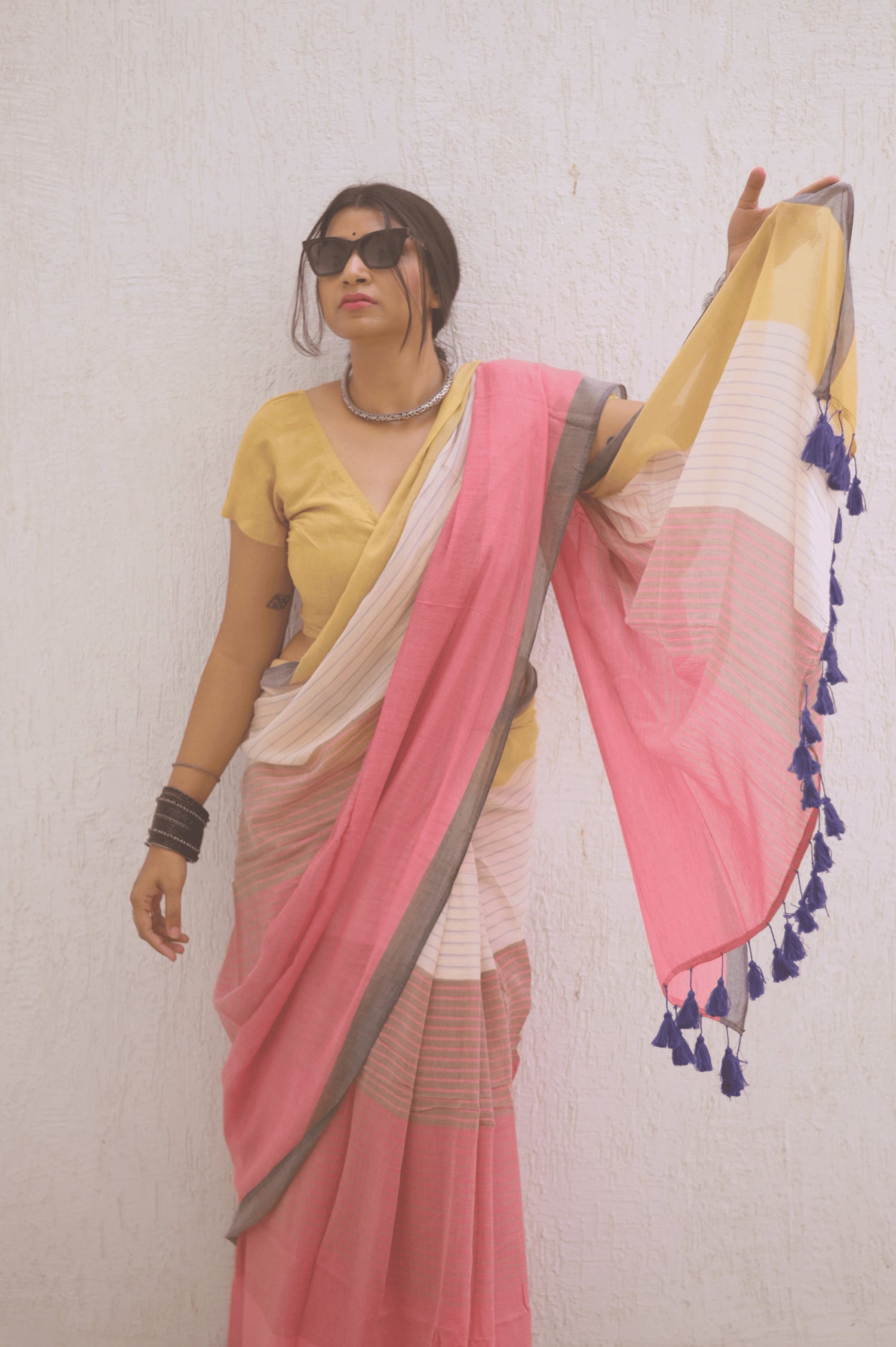


Monsoon Saree Guide: What to Wear in the Rains and How to Keep It Dry

The best monsoon saree is light, thin and quick to dry: a printed chiffon, a synthetic blend or a fine mul cotton or mul modal in a darker colour. Keep heavy cottons, silks, zari, tissue and anything white or pale for dry days. Fabric is only half of it. How high you tie the hem, where you put the pins, what you wear underneath and on your feet, and how you dry and store sarees in damp air decide whether the rainy season is a pleasure or a fight. This guide covers all of that, for the June to September southwest monsoon and for the October to December rains in Tamil Nadu and the south east coast.
What a Saree Has to Survive in the Rain
A saree is about 5.5 metres of cloth, and its lowest edge, the hem and the bottom of the pleats, sweeps close to the ground. In the rain that hem meets puddles, splashes from passing vehicles and wet floors. A good rainy day saree handles four problems.
How much water a fibre holds explains a lot. In the standard textile trade table of moisture regain, polyester holds only about 0.4 percent moisture in normal air and nylon about 4.5 percent, against roughly 7 to 8.5 percent for cotton yarn, 8.75 for linen, 11 for silk and viscose rayon and 13.6 for wool. Fibres that hold less water generally dry faster, which is why synthetic chiffons and blends are the usual rainy season choice. Thickness matters too: a fine mul cotton dries far sooner than a thick handloom cotton with the same fibre.
Fabrics That Cope With Rain
For the full comparison of everyday fabrics, see our best saree fabric guide. Here is how the common choices behave once they are actually wet.
Chiffon is a sheer, lightweight plain-weave fabric that can be made from silk or man-made fibres, so its behaviour depends on what it is made of. Much of the chiffon sold for everyday wear is synthetic, and synthetic chiffon copes well with rain. To understand the fabric better, read what a chiffon saree is. If you are choosing between the two soft cottons, our mul cotton vs mul modal guide compares them side by side.
Sarees to Keep for Dry Days
Save these for clear days, or carry them in a bag and change at the venue.
If a silk or zari saree does get caught in rain, do not rub the wet spots. Blot gently with a dry cotton towel, hang it open in the shade until fully dry, and take it to a dry cleaner if water rings remain. Our saree stain removal guide covers mud and other stains fabric by fabric.
Colours and Prints That Hide Splashes
A darker colour or a busy print hides the brownish splashes that collect along the hem on the walk to work. Small all-over prints, dots, checks and florals break up a mark far better than a plain pale ground.
A darker border helps too: mud along the hem disappears into it. If you want a light colour anyway, pick a print with plenty of pattern near the hem.
Raising the Hem and Setting the Pleats
Normally the saree hem skims the top of your foot or sits just above the floor in heels. In the rain, raise it so it clears the ground when you walk. That usually means tying the saree 1 to 2 inches higher than usual, so the hem sits at or just above the ankle bone.
Raise the back as well. After the first round, check that the saree is not lower at the back than at the front, since it is the back hem that catches splashes from behind. When you climb stairs or step over water, lift the pleats at the front with your right hand rather than gathering the whole saree, so the drape stays in place.
Petticoat, Blouse and What Goes Underneath
What you wear under the saree matters more in the rain than at any other time of year, because damp fabric shows everything beneath it.
Thin petticoats in quick-dry blends or saree shapewear in a stretch fabric hold less water than a heavy cotton petticoat with a deep hem. If your saree is sheer or pale, a skin-tone or matched layer stops it turning see-through when wet. Our saree petticoat guide covers colour, fabric and fit in detail.
For the blouse, a fine cotton breathes in humid air, while a fully synthetic blouse can feel clammy by afternoon. Elbow or three quarter sleeves keep a little rain off the arms, but avoid long, tight sleeves that stay damp all day. Pick a blouse colour that will not bleed onto the saree if both get wet.
Pinning a Saree for Wind and Rain
Monsoon winds catch a loose pallu like a sail, and a damp saree slides more easily than a dry one. A pleated pallu pinned at the left shoulder is the steadiest choice for rainy days. Use rust-free steel safety pins, and always pin from the inside through two layers of cloth.

For heavy rain, take the loose end of the pallu, which hangs down your back from the left shoulder, bring it forward over your right shoulder and tuck the end in at the front of the waist on the right. The pallu then sits across both shoulders like a light shawl and the loose end stays off the ground. Our guide to pinning a saree explains how many pins each fabric needs.
Footwear for Wet Streets
Rainy day footwear has three jobs: grip on wet floors, survive water, and keep the hem off the ground. A small, firm heel or a flat sandal with a ridged rubber sole does all three.
For setting the hem for heels, flats and sneakers, see our footwear for saree guide.
The Office Commute in a Saree
Wearing a saree to work in the monsoon is easier with a short plan. The aim is to arrive dry enough, change anything that got soaked and look composed at your desk. For building a work wardrobe that suits it, see how to look professional in a saree.
On a two-wheeler or in an auto
On a scooter or bike, sit sideways only if you are used to it, and keep the pleats and the pallu well away from the wheel and chain. Tuck the pallu in at the waist, gather the pleats under your knees, and wear a raincoat over the whole drape. In an auto or cab, lift the pleats as you step in so they do not trail on the wet floor.
At your desk
Shake out the hem and blot it with the towel. If the lower part is wet, loosen the pleats and let them hang free for half an hour under a fan; they dry much faster open than folded. Thin chiffon and synthetic blends are usually dry within an hour or two indoors.
Drying and Storing Sarees in Humid Weather
Damp air is the real risk of the season. Textile conservators and archivists advise keeping relative humidity below about 65 percent, because above that level mould can grow on cloth, especially in warm, still air. Cotton and linen are particularly prone, and monsoon air in much of India often stays above that level for weeks.
Drying a wet saree indoors
For washing methods fabric by fabric, read how to wash cotton, chiffon and linen sarees.
Storing sarees so they do not get mildew
If you find mildew spots, take the saree outdoors and brush the surface gently so spores do not spread indoors. Wash washable cotton and modal sarees as their care label says and dry them thoroughly. Take silk, zari and any dry clean saree to a dry cleaner rather than scrubbing it. Our guide to folding sarees shows folds for cotton, chiffon and travel.
Sarees in This Guide
These MAYIN sarees suit rainy days because they are light, and their deeper colours or busy prints hide splashes. The chiffons come with a 1 m crepe blouse piece and are dry clean. The mul cotton sarees come without a blouse piece, and the mul modal comes with a 1 m running blouse piece in the same fabric; the plain and printed mul cotton and mul modal sarees here take a gentle cold hand wash. Every MAYIN saree is 5.5 m long and 45 inches wide, and delivery in India is free on orders of ₹2,000 and above.
 FlorinaNavy blue floral print pure chiffonPair with Silver, mustard
 VeyonaBlue floral print pure chiffonPair with Navy, silver
 OreliaGreen floral print pure chiffonPair with Emerald, gold
 Rouge WavesPink leheriya print pure chiffonPair with Fuchsia, gold
 Spot OnCharcoal polka dot mulmul cottonPair with Charcoal, silver
 Regal Pin DropMaroon red polka dot modal cottonPair with Maroon, beige
 After DarkPlain black mul cottonPair with Black, red
 Dusty PetalMauve pink gingham mulmul cottonPair with Mauve, wine
Florina, Veyona and Orelia are floral print pure chiffons at ₹3,999 each, dark enough to hide a muddy hem. Rouge Waves, a pink leheriya print pure chiffon at ₹3,999, has the kind of all-over pattern that breaks up splashes. For office days, Spot On (charcoal polka dot mul cotton, ₹2,499), After Dark (plain black mul cotton, ₹1,699) and Dusty Petal (mauve pink gingham mul cotton, ₹2,199) can be hand washed in cold water after a wet commute, and Regal Pin Drop (maroon red polka dot mul modal, ₹2,499) brings its own blouse piece. Browse more in our chiffon sarees collection.
Questions People Ask
Which saree is best for the rainy season?
A light, quick-drying saree in a darker colour or busy print: synthetic chiffon, a stretch blend, or a fine mul cotton or mul modal. These dry fast, stay light when wet and hide splashes.
Can we wear a cotton saree in the rainy season?
Yes, if it is thin. Fine mul cotton dries fairly fast and can be hand washed after a muddy day, while thick handloom cotton turns heavy and slow to dry. Choose darker shades, as wet pale cotton can turn sheer.
Is chiffon good for monsoon?
Usually yes. Chiffon is light and thin, and synthetic chiffon holds very little water, so it dries quickly and keeps its drape. Pick a print or a deeper colour so it stays opaque when wet.
Can I wear a silk saree in the rain?
It is best not to. Rain can leave water marks on silk and some dyes may run. Carry the silk saree in a bag and change at the venue, or choose a lighter fabric for the day.
Which colour saree is best for the rainy season?
Deeper shades such as navy, maroon, bottle green, charcoal and wine hide mud best. Bright colours with all-over prints also work. Keep white, ivory and pastels for dry days.
How do I stop my saree getting dirty at the bottom in the rain?
Tie the petticoat and saree 1 to 2 inches higher so the hem sits at about the ankle bone, keep the pleat hems level, and lift the front pleats when you climb steps or cross water.
What footwear should I wear with a saree in the monsoon?
Rubber or waterproof sandals and flats with a ridged sole, or a low block heel. Avoid leather soles, suede and thin stilettos, and set the hem with the shoes you will walk in.
How do I dry a saree in the monsoon?
Shake off the water without wringing, hang it open over two lines or a long rod, and dry it under a fan rather than heat. Fold it only when it is completely dry.
How do I protect sarees from fungus in the monsoon?
Store them only when fully dry, in cotton covers rather than plastic, with silica gel in closed shelves. Air the wardrobe on dry days and refold the sarees every few weeks.
How do I remove the damp smell from a saree?
Air it open in the shade with a fan running until it is fully dry. Hand wash washable cotton or modal sarees as the care label says, and take dry clean sarees to a dry cleaner if the smell stays.


