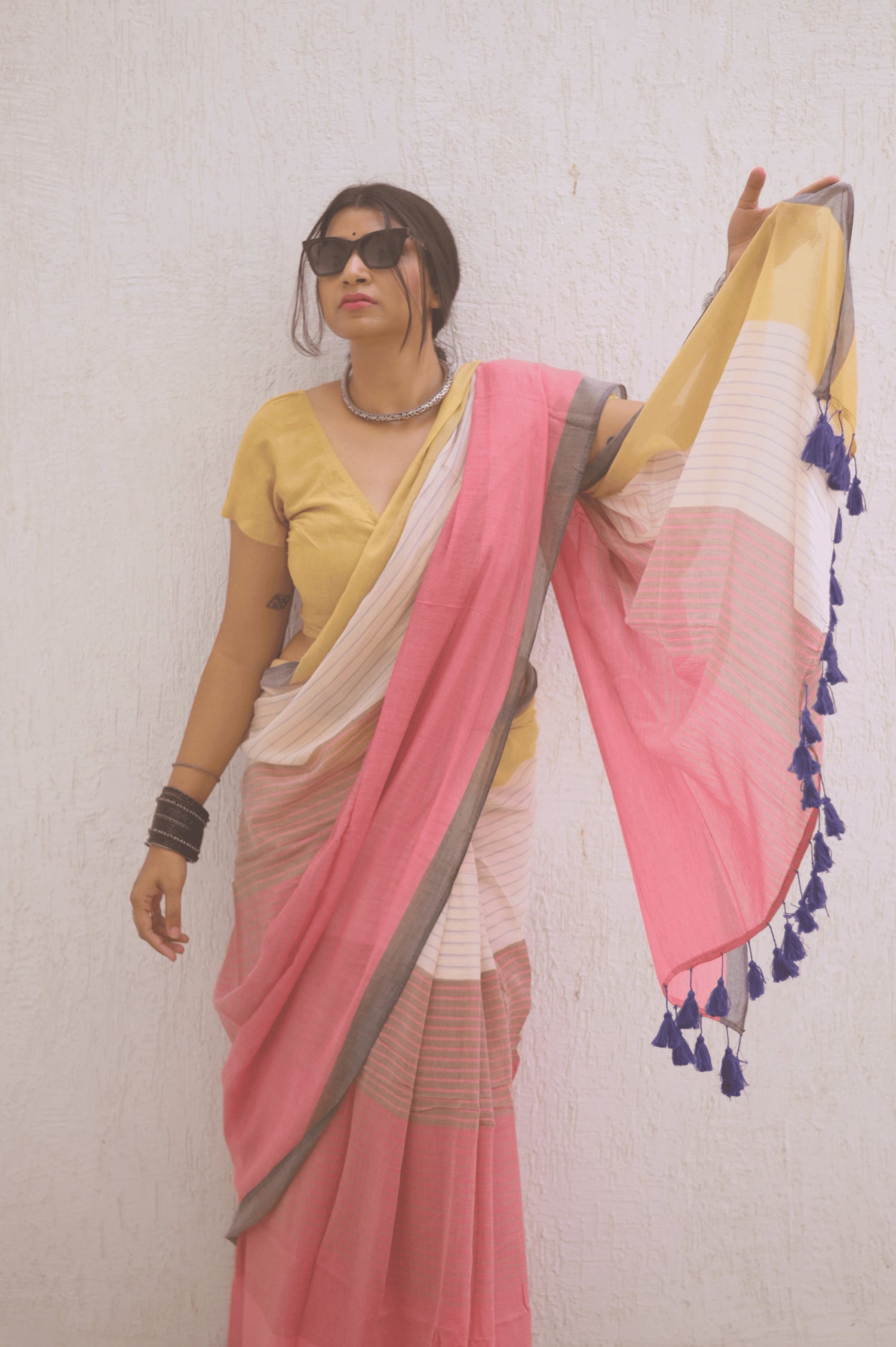


Brasso Saree: What Burnout Fabric Is, How It Drapes and How to Care for It

A brasso saree is a saree made from burnout fabric, also called devoré: a cloth woven from two kinds of fibre, where one fibre is dissolved away in a pattern so the design shows as sheer motifs on a more solid ground. The result is a light, semi-transparent saree with a raised, almost carved look, worn mostly for evening functions, receptions and parties. This guide explains how brasso is made, how it feels next to georgette, chiffon and net, which occasions and seasons suit it, what to wear under the sheer parts, and how to wash and iron it without harming the delicate areas.
What Brasso Fabric Is
"Brasso" is the name used in Indian ethnic wear for burnout fabric. The wider textile world calls the technique devoré, from the French word for "to devour", because a chemical paste eats away part of the cloth. The technique was developed in France for fashion fabrics, and burnout velvets were already being used for evening coats and dresses by the mid 1920s.
The idea depends on a blend. Plant based (cellulose) fibres such as viscose, rayon and cotton are attacked by acid. Silk, which is a protein fibre, and synthetics such as polyester resist it. Weave the two together, print an acid paste in a pattern, and the cellulose disappears where the paste touched, leaving only the finer, see-through layer of the fibre that resisted.
How Brasso Feels and Drapes
Run your hand over a brasso saree and you feel two textures. The solid parts are soft and slightly denser. The burnt out parts are thin, smooth and see-through, and sit a fraction lower, which is what gives the motifs their raised look.
Most brasso used for sarees is light and fluid, so it falls close to the body and pleats into soft folds. How it drapes depends on the base. A brasso on a georgette type ground has a little grip and holds pleats well. One on a smooth chiffon type ground flows more and slips more. A velvet burnout is heavier, warmer and best kept for winter evenings.
Brasso vs Georgette, Chiffon and Net
Brasso is not a separate yarn or weave. It is a finish applied to a blended cloth, which is why you will see "georgette brasso" or "chiffon brasso". Georgette, chiffon and net are fabrics in their own right, and each is sheer in a different way.
In practice, pick georgette if you want an all-over soft fall with good grip, chiffon for the lightest and most fluid drape, net for a structured, see-through ground that carries embroidery, and brasso when you want pattern built into the cloth itself with sheer and solid areas side by side. For more on each, see our guides to georgette sarees, chiffon sarees and net sarees. Sarees where fabric is cut away by hand or on the loom are a different thing, explained in our cutwork saree guide.
Reading the Label Before You Buy
A product name like "brasso silk" or "georgette brasso" tells you the look, not the fibre content. For burnout to work, one fibre has to dissolve, usually a cellulose such as viscose or cotton, so a brasso saree is almost always a blend. Ask what both fibres are, because that decides how the saree feels in heat and how you should wash it.
Occasions and Seasons
Brasso reads as dressy because of its texture and sheen. It is usually chosen for evening functions rather than office or daily wear.
Season matters more than you might think. A polyester and viscose brasso is light but does not breathe like cotton, so on a hot afternoon it can feel warm and stick to the skin. It is at its best in the cooler months, in air-conditioned venues and at night. A silk and viscose blend breathes a little better. A velvet burnout is a winter fabric. In the monsoon, keep brasso for indoor functions, because wet viscose is weak and mud on the sheer areas is hard to clean. For evening dressing ideas, see the cocktail saree guide.
Petticoat and Shapewear for the Sheer Areas
Everything under a brasso saree shows through the burnt out motifs: the petticoat colour, its seams and hem, and the line of any shapewear. Getting this layer right does more for the look than any accessory.

Our saree petticoat guide covers fabrics and fits, and the saree shapewear guide explains sizing and how to tuck the saree into a shapewear band.
Blouse Choices for a Brasso Saree
The pallu of a brasso saree is semi-transparent, so the blouse is seen through it at the front and from behind. Think about the blouse as part of the drape, not separately.
Draping Brasso Without Damage
Brasso drapes like any light sheer saree. For the full nivi steps, follow our guide on how to drape a chiffon saree; the method is the same.
How to Wash a Brasso Saree
Dry cleaning is the safest choice for brasso, and the right one for any saree with sequins, stones, foil or a silk content. The reason is the viscose. Regular viscose loses roughly half its strength when wet and can shrink if machine washed, and in a burnout cloth the viscose is what holds the solid areas. Tell the dry cleaner it is a burnout fabric and point out any embellishment.
If the label allows hand washing, and the saree is a plain polyester and viscose brasso without work, you can wash it gently at home.
For more on washing light sarees, see our guide on how to wash cotton, chiffon and linen sarees.
Ironing and Storing Brasso
With a blend, iron at the setting for the most heat sensitive fibre. For polyester blends that means the synthetic setting, which is cooler than the cotton setting. Too much heat can glaze or melt the polyester, and the sheer areas are only that fibre.
Our guide to ironing a saree has fold by fold steps. To store brasso, fold it loosely with a sheet of plain muslin or tissue between folds, keep it in a cotton bag away from sharp objects and zips, and refold it along different lines every few months so creases do not weaken one spot.
Sarees in This Guide
If you like brasso for its light, sheer evening feel, these MAYIN chiffon partywear sarees give a similar effect in a lighter cloth: they are sheer all over rather than in a pattern, and each comes with a 1 m crepe blouse piece. All MAYIN sarees are 5.5 m long and 45 inches wide, and they are dry clean only. You can see more in the chiffon sarees collection.
 FlorinaNavy blue floral print pure chiffonPair with Gold, navy
 JulietMauve pink floral print pure chiffonPair with Mauve, silver
 Rouge WavesPink leheriya print pure chiffonPair with Fuchsia, gold
 SocialiteOld rose sequin chiffonPair with Blush pink, silver
 European ViolaViolet floral hand painted chiffonPair with Lavender, silver
 StarletWine sequin pure chiffonPair with Wine, gold
Questions People Ask
What is brasso fabric?
Brasso is burnout fabric, also called devoré. It is woven from two fibres, and an acid paste dissolves one of them in a pattern, leaving sheer motifs on a solid ground.
Is brasso the same as burnout?
Yes. Brasso is the name used in Indian ethnic wear for burnout or devoré fabric.
Is a brasso saree transparent?
Partly. The burnt out motifs are see-through and the solid ground is fuller, so you need a petticoat matched to the ground colour and a lined blouse.
Is brasso silk or synthetic?
It is almost always a blend. Polyester with viscose is common, and silk with viscose is also made, so check the fibre content rather than the product name.
Which is better, brasso or georgette?
They suit different needs. Georgette is evenly sheer with a grainy, matte grip that holds pleats; brasso has sheer and solid areas in one cloth and looks dressier.
What is the difference between brasso and net?
Net is an open mesh that is see-through everywhere and often carries embroidery. Brasso gets its pattern by burning away part of the cloth, so it is sheer only in the design.
Can I wash a brasso saree at home?
Only if the label allows it and the saree has no sequins or work. Use cold water and mild detergent, never wring, and dry flat in the shade; otherwise dry clean.
How do I iron a brasso saree?
Use the synthetic or silk setting, iron on the reverse or through a cotton press cloth, and avoid steam directly on the fabric.
Is brasso good for summer?
Polyester blends can feel warm and clingy in daytime heat, so brasso suits evenings, air-conditioned venues and cooler months better.
Which petticoat goes with a brasso saree?
A smooth petticoat or shapewear petticoat in the same colour as the solid ground, with flat seams, so nothing bunches or shows through the sheer motifs.
Why does my brasso saree tear near the design?
The edges of the burnt out motifs are the thinnest part of the cloth. Pins, jewellery and rough sequin backs snag there, so pin only through solid areas.


