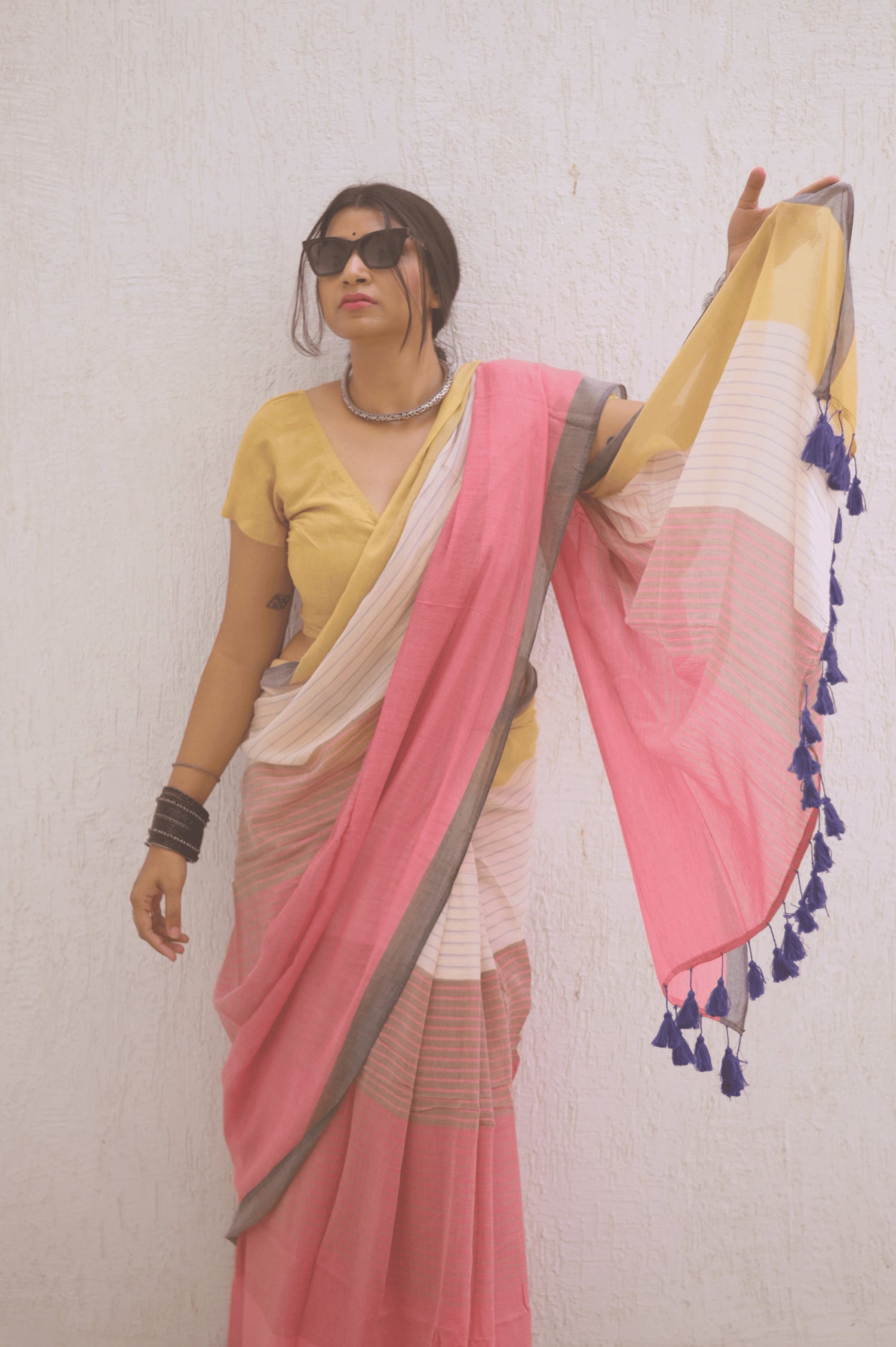


Bamboo Saree: What Bamboo Silk and Bamboo Cotton Really Are, Feel, Price and Care

A bamboo saree is almost always woven from a regenerated fibre made from bamboo pulp, usually viscose (rayon) and sometimes lyocell, not from raw bamboo strands. "Bamboo silk" is a trade name for a soft, lustrous bamboo viscose saree: it contains no silk unless a real silk yarn is blended in, and "bamboo cotton" means bamboo viscose woven with cotton. That does not make these sarees bad. They are light, cool against the skin and take colour well. But it does change what you should expect from the eco claims, how you wash the saree and what a fair price is. This guide explains how bamboo is turned into yarn, the common blends, how the fabric behaves in Indian heat and humidity, how to read the label, how it compares with cotton, linen, modal and art silk, and how to care for it.
What a Bamboo Saree Is
Bamboo is a grass with a woody stem. You cannot spin a fine, soft saree yarn straight from the stem the way you spin cotton from its boll. To get a yarn soft enough for a saree, the bamboo is pulped, its cellulose is dissolved in chemicals, and the liquid is pushed through tiny holes to form new filaments. The result is a regenerated cellulose fibre: chemically it is the same family as viscose rayon made from wood pulp, and once spun it behaves like it.
So when a shop says "bamboo saree", it usually means one of three things:
"Bamboo silk" is the name that causes most confusion. Silk is a protein fibre spun by silkworms. Bamboo viscose is a plant cellulose fibre. They look alike at a glance because both can be smooth and shiny, which is why the name stuck. For the wider family of silk-look sarees made from viscose or polyester, read our guide to the art silk saree. This guide stays with bamboo.
Bamboo yarn is woven on handlooms in India too. Weavers in Karaikudi in Tamil Nadu, for example, weave sarees in bamboo yarn, valued for their light weight and texture, and handloom blends of bamboo with tussar and cotton are also woven and sold. A finished bamboo saree is often hard to tell from other yarns by eye, which is why the label matters so much.
How Bamboo Becomes Yarn
There are three ways to make a textile fibre from bamboo, and they give very different fabrics. Almost every bamboo saree you will see is the second or third kind.
The key point is what happens in the middle step. Once the cellulose is dissolved and re-formed, the new fibre no longer carries the structure of the bamboo plant. It is the same kind of fibre that viscose made from eucalyptus, beech or pine would be. That is why textile scientists and regulators treat bamboo viscose as rayon first and bamboo second.
Bamboo Silk, Bamboo Cotton and Bamboo Tussar
Bamboo yarn is rarely used alone in a saree. Weavers blend it to control lustre, body and price. Knowing the blend tells you how the saree will drape and how it should be washed.
Bamboo with tussar is a true mixed-fibre saree: tussar is a wild silk, a protein fibre, so the saree is part silk and part cellulose. That is quite different from a "bamboo silk" saree with no silk in it at all. If tussar interests you, our tussar silk saree guide explains the weave and how it ages. For cotton and silk mixes without bamboo, see the cotton silk saree guide.
How It Feels, Breathes and Drapes
Bamboo viscose is soft and smooth on the skin, with a natural soft shine. Its fibres have a grooved surface that pulls sweat away and lets it evaporate, and like other viscose it usually absorbs more moisture than cotton. In practice, a bamboo saree feels cool when you first put it on and does not cling as much as polyester on a humid day.
If you sit at a desk all day or travel by local train, a bamboo cotton blend usually wears better than pure bamboo viscose: the cotton adds body and the creases are less obvious. For a dressier day with a lot of standing and walking, pure bamboo viscose gives the softer, more fluid fall. For more fabric comparisons by season and occasion, see our best saree fabric guide.
The Eco Claims, Honestly
Bamboo sarees are often sold as natural, eco friendly or sustainable. Some of that is true and some is not. The fairest way to look at it is to separate the plant from the process.
So the honest answer is: a bamboo saree can be a lower-impact choice than a polyester one, especially if it is lyocell or comes with a credible certificate, but it is not automatically greener than cotton, linen or a handloom saree. If sustainability is your reason for buying, ask the seller three things: is the yarn viscose or lyocell, where is the pulp from, and is there any certificate.
A word like "eco", "organic bamboo" or "pure bamboo" on its own is not a certificate. Even if the bamboo itself was grown organically, regenerated bamboo yarn is generally not treated as an organic fibre in the way organic cotton is, because the chemical step comes after the plant.
How to Read the Label
Most of the confusion around bamboo sarees disappears once you look for the fibre content. A clear label lists each fibre and, ideally, its percentage.
If you already own the saree and want to check it, a careful burn test on a few threads pulled from the unfinished end can help. Do it over a sink, away from anything that can catch fire.
A burn test tells bamboo viscose from silk and polyester. It cannot tell bamboo viscose from cotton or other viscose, since they all burn the same way. For more on telling real silk apart, see our guide to the Silk Mark and Handloom Mark.
Bamboo vs Cotton, Linen, Modal and Art Silk
Bamboo sits between cotton and art silk: softer and shinier than cotton, more breathable than polyester. Modal is its closest relative. Like bamboo viscose it is a regenerated cellulose fibre, usually made from beech wood pulp, but it is spun to be stronger when wet, so it usually handles gentle hand washing better.
For more detail on each, read types of cotton sarees, what a linen saree is and mul cotton vs mul modal. If you like stretch and a body-skimming fit, the lycra saree guide covers that very different fabric.
What a Bamboo Saree Costs
Prices vary with the blend, the loom and the work on the saree. As of 2026, online listings for power loom bamboo silk and bamboo cotton sarees sit roughly between ₹1,000 and ₹3,500. Handloom blends, lyocell and sarees with heavy zari or embroidery usually cost more.
Blouse, Drape and Styling
Bamboo viscose has a soft sheen and a fluid fall, so it sits halfway between everyday cotton and a festive silk. That makes it useful for the office, small family functions and day events.
For the blouse, choose a fabric with a little body, such as cotton, cotton silk or a lined fabric. A very thin blouse in the same slippery viscose can wrinkle at the waist and slide. If the saree comes with a blouse piece in the same fabric, ask your tailor to add a cotton lining so it holds shape and absorbs sweat. Our blouse fabric guide and simple blouse designs have more ideas.
For the full nivi drape step by step, see how to wear a saree, and for neat pleats in soft fabrics, how to make saree pleats.
Washing and Care
Always follow the care label first. When there is none, treat a bamboo viscose saree like any regular viscose: it is noticeably weaker when wet, can shrink in warm water and loses shape if wrung. Handloom blends with tussar, zari borders or embroidery are safest dry cleaned.
Monsoon is the hardest season for viscose: the saree stays weaker while damp, and dark dyes can mark a light petticoat. Our monsoon saree guide has fabric tips for rainy days, and how to wash cotton, chiffon and linen sarees covers the other common fabrics.
Similar Sarees to Consider
If what draws you to bamboo is a soft, light saree that feels cool and drapes fluidly, these are sensible alternatives from MAYIN. They are not bamboo sarees. The mul modal sarees are the closest in feel, since modal is also a regenerated cellulose fibre; the mul cotton and linen sarees are natural fibre options for heat. Every MAYIN saree is 5.5 m long and 45 inches wide.
 Dusty RosePlain peach mul modalPair with Ivory, brown, gold
 Mauve MelodyPlain pink mul modalPair with White, silver, maroon
 Regal Pin DropMaroon red polka dot modal cottonPair with Cream, gold, black
 Lilac BlushPlain purple mulPair with Silver, white, mint
 After DarkPlain black mul cottonPair with Red, silver, white
 ComposurePink pure handloom linen with zari borderPair with Gold, ivory, green
The mul modal sarees, Dusty Rose, Mauve Melody and Regal Pin Drop, come with a 1 m running blouse piece in the same fabric and take a gentle cold hand wash. Lilac Blush and After Dark are plain mul cotton, without a blouse piece, and also take a gentle cold hand wash. Composure is pure handloom linen at ₹4,499 with a 1 m blouse piece, and should be dry cleaned. Browse more in mul modal sarees, summer sarees and linen sarees. Delivery is free in India on orders of ₹2,000 and above.
Questions People Ask
What is a bamboo saree?
A saree woven from yarn made from bamboo pulp, almost always regenerated viscose and sometimes lyocell. It is often blended with cotton, tussar or polyester.
Is bamboo silk real silk?
No. Bamboo silk is a trade name for lustrous bamboo viscose. It contains silk only if the label lists a silk yarn such as tussar, and it cannot carry the Silk Mark.
What is a bamboo cotton saree?
A blend of bamboo viscose and cotton, often cotton in one direction of the weave and bamboo in the other. It is more matte than bamboo silk and holds pleats better.
Is bamboo silk the same as viscose or rayon?
Usually yes. Fibre regenerated from bamboo pulp is a type of viscose rayon, and US rules require the generic fibre name on the label, such as "rayon made from bamboo".
Is a bamboo saree good for summer?
Yes, as a rule. Bamboo viscose absorbs sweat well and feels cool. Choose a bamboo cotton blend for long, hot days and avoid polyester-heavy blends.
Is bamboo fabric antibacterial?
Not reliably. Studies disagree, and US regulators say the chemical processing removes any antibacterial property the plant had.
Is a bamboo saree eco friendly?
The plant grows fast without pesticides, but conventional viscose processing uses harsh chemicals. Lyocell or a certified source is the greener choice.
Can I wash a bamboo silk saree at home?
Plain bamboo viscose can usually be hand washed in cold water with mild detergent, without wringing. Follow the label, and dry clean zari, embroidered or tussar-blend sarees.
Does a bamboo saree shrink?
It can, in warm water or a hot dryer, because viscose swells and weakens when wet. Wash cold and dry in the shade.
How can I tell if my saree is really bamboo?
Ask for the fibre content first. A burn test can separate viscose from silk and polyester, but it cannot tell bamboo viscose from cotton or other viscose.
What is the price of a bamboo silk saree?
As of 2026, roughly ₹1,000 to ₹3,500 for most power loom pieces online. Handloom bamboo blends usually cost more.
Does a bamboo saree wrinkle?
Less than plain cotton or linen, but it still creases after hours of sitting. A bamboo cotton blend hides creases better.


