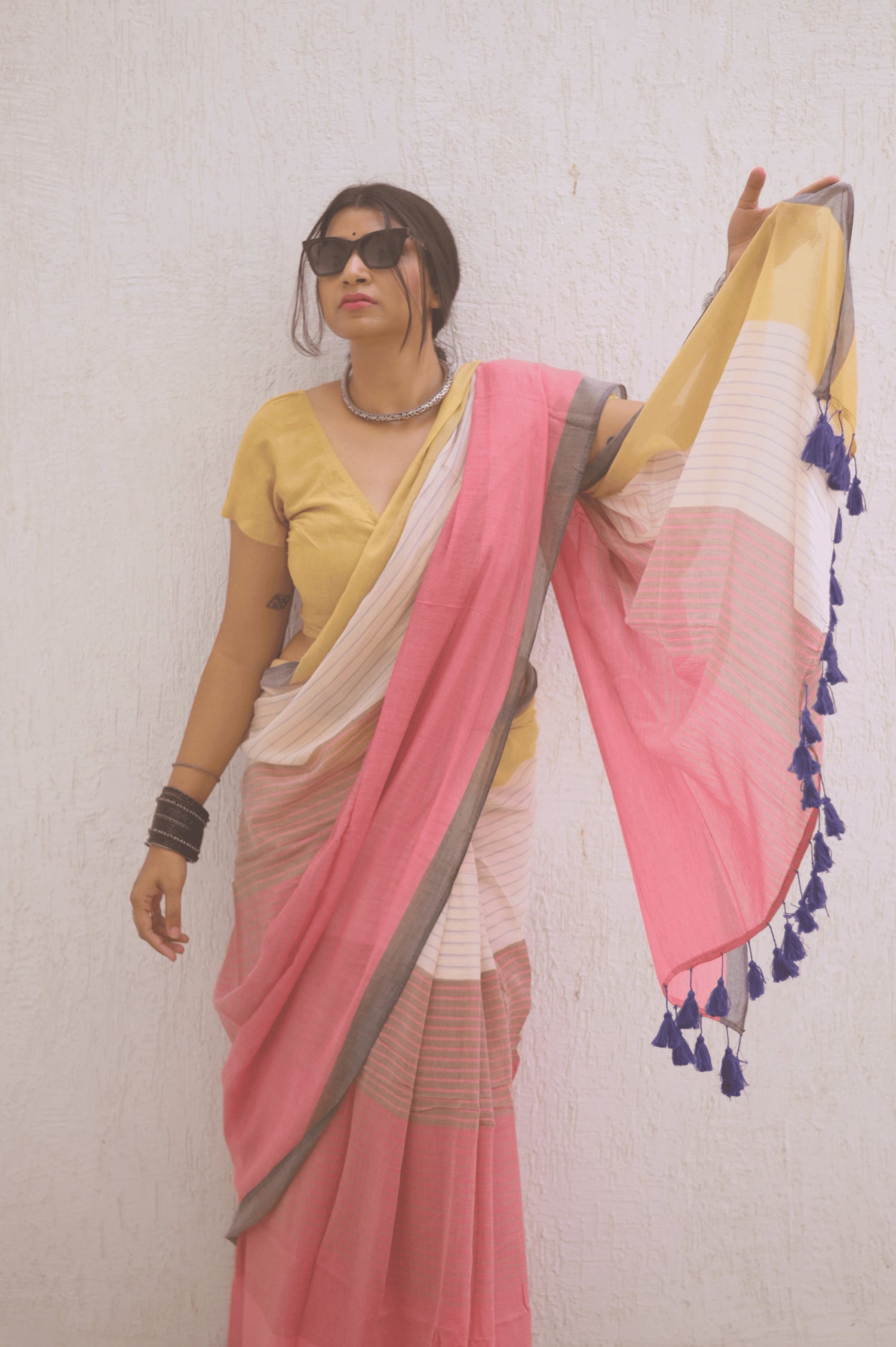


Pichwai Saree: Nathdwara Art, Motifs, Real vs Printed and Care

A pichwai saree is a saree painted, printed or woven with the imagery of Pichwai, the devotional cloth paintings made in Nathdwara, Rajasthan, to hang behind the image of Shrinathji, a form of Krishna. Its signs are easy to learn: cows, lotuses, kadamba trees, peacocks, gopis and the full moon of Raas Leela, usually in deep reds, blues, greens, saffron and gold. This guide explains where the art comes from, what each motif means, the three kinds of pichwai saree you will find, how to tell a hand painted one from a print, the fabrics it sits on, what it costs, and how to wear and look after it.
What a Pichwai Saree Is
The word pichwai (also spelt pichhwai) means a hanging at the back. In the temples of the Pushtimarg, a Vaishnav tradition devoted to Krishna, large painted cloths are hung behind the deity and changed with the festival and the season. A pichwai saree borrows that visual language and moves it from the temple wall to the drape.
So the name tells you about the design, not the fabric or the method. A pichwai saree can be a cotton saree printed with a row of cows, a chanderi saree with a lotus pond painted by hand across the pallu, or a jacquard saree with cows and lotuses woven into the border. The three are very different in price, feel and care, which is why the sections below spend time on telling them apart.
Pichwai sits in a family of Indian painted and printed sarees. If you are comparing it with its neighbours, our guides to Kalamkari sarees (pen drawn and block printed, from Andhra Pradesh), Warli print sarees (stick figure tribal art from Maharashtra) and hand painted sarees in general cover those in depth. The quickest way to recognise pichwai among them is the subject: almost everything in it points back to Krishna and his childhood in Braj.
From Temple Hanging to Saree
The story starts with Vallabha (about 1479 to 1531), who founded the Pushtimarg and, according to Britannica, found its central image of Krishna, called Shrinathji, at the foot of Mount Govardhan near Mathura. In 1672 the image was taken away from Braj to protect it in the time of Aurangzeb. The cart carrying it is said to have sunk in mud near the village of Sihad in Mewar, which was taken as a sign, and a shrine was built there under Maharana Raj Singh. The town became Nathdwara, the gate of the Lord.
Painters gathered around the shrine. The Ministry of Textiles' handicrafts office names the Chitere community, including Adi Gaur, Joshi and Jangid families, as the makers of Nathdwara pichwais, and the MAP Academy notes that artists from Kota and Kishangarh joined the workshops, which is why pichwais look close to the Mewar school of Rajasthani painting. Few old pichwais are dated; the earliest known dated example from Nathdwara is from about 1846.
A temple size painting can take 10 to 45 days and two to five artists, according to the All India Artisans and Craftworkers Welfare Association. In 2023 the GI registry issued a certificate for Nathdwara Pichhwai Painting (application 748). That GI protects the painting tradition of the region. A saree labelled pichwai is usually a saree made in that style, and the label alone does not tell you who painted it, where, or whether it was painted at all.
Pichwai Motifs and What They Mean
Pichwai is a language of symbols. Once you know a handful, you can read a saree pallu the way a devotee reads a temple backdrop. The meanings below come from museum and textile research, not from saree marketing.
Seasons and Festivals in Pichwai
Temple pichwais change through the year, and Shrinathji himself is dressed light in summer, heavy in winter and splashed with colour for Holi. Saree makers borrow these themes freely, so a motif can hint at the season or festival a saree suits.
For Krishna festivals in particular, see our Janmashtami saree guide, and for what to wear to a temple or home puja, the pooja saree guide.
Hand Painted, Printed or Woven
Almost every pichwai saree on sale falls into one of three groups. Each is honest when it is described correctly; the trouble starts when a print is sold at the price of a painting.
There are also mixed sarees: a woven border with a painted pallu, or a printed body with hand painted touches in gold. These are common and perfectly good, as long as the description says which part is which. Our printed saree guide explains block, screen and digital printing in more detail.
How to Tell Hand Painted From Printed
You do not need a lab. Good daylight, the back of the fabric and a few minutes with the pallu will tell you most of what you need. No single test is proof on its own, so look for several signs together.
Price is a clue too. A full length hand painted saree takes skilled time, so a "hand painted pichwai" at the price of an everyday print deserves a closer look.
Fabrics Pichwai Appears On
Temple pichwais were mostly painted on cotton, with silk and brocade for special seasons. Sarees follow the same pattern, with a few modern additions.
If chanderi is new to you, our chanderi saree guide explains the weave and how to check it. For a soft cotton base that suits painted work in the heat, see what mul cotton is.
Pichwai Saree Prices in 2026
Prices vary with the method, the fabric and how much of the saree is painted. The bands below are approximate, based on listings we checked in November 2026, and will move with time and seller.
How to Style a Pichwai Saree
Pichwai is busy, detailed art. The rule that works almost every time is to let the saree speak and keep everything else quiet.
Pick one colour already in the painting, often the lotus pink, a leaf green or the gold, and use it for a plain blouse. A plain raw silk or cotton blouse lets the painting carry the look. If the pallu is the painted part, an elbow sleeve of roughly 10 to 12 inches from the shoulder point keeps the blouse calm and lets the pallu fall cleanly over the left shoulder in a nivi drape. Our blouse designs for cotton sarees guide has more simple cuts.
Caring for a Pichwai Saree
Care depends on the kind of pichwai saree, not on the name. Always follow the maker's label first.
Our guide to washing cotton, chiffon and linen sarees has fabric by fabric detail.
Hand Painted Sarees in This Guide
These MAYIN sarees are hand painted with flowers, not Pichwai scenes, so they are a lighter alternative for anyone drawn to painted sarees with a softer, simpler look. Every MAYIN saree is 5.5 m long and 45 inches wide.
 Apricot BloomBeige handpainted mul cottonPair with Maroon, bottle green, gold
 AnthuriaMint green handpainted mulmul cottonPair with Pink, ivory, gold
 FrangipaniBeige floral hand painted chiffonPair with Maroon, gold, ivory
 Damask RosePink floral hand painted chiffonPair with Bottle green, ivory, gold
 European ViolaViolet floral hand painted chiffonPair with Mustard, ivory, silver
Apricot Bloom and Anthuria are hand painted mul cotton sarees at ₹2,499, sold without a blouse piece. Frangipani, Damask Rose and European Viola are hand painted chiffon sarees at ₹3,499, each with a 1 m crepe blouse piece. All five are dry clean. See more in hand painted sarees and hand painted chiffon sarees. Delivery in India is free on orders of ₹2,000 and above.
Questions People Ask
What is a pichwai saree?
It is a saree decorated with the imagery of Pichwai, the temple cloth paintings of Nathdwara made for Shrinathji. The design may be hand painted, printed or woven, so always check which.
What does pichwai mean?
Pichwai means a hanging at the back. The paintings were made to hang behind the image of Shrinathji in Pushtimarg temples.
Where is pichwai painting from?
Nathdwara, a temple town near Udaipur in Rajasthan, where the Shrinathji image arrived in 1672. The style also spread to other Pushtimarg centres, including the Deccan.
What do the cows in pichwai mean?
They are the cows of Braj, where Krishna grew up as a cowherd. Their tenderness towards their calves stands for the devotee's love for the child Krishna.
What does the lotus mean in pichwai art?
The lotus stands for purity, and summer pichwais are often filled with pink lotuses and lotus ponds.
How can I tell if a pichwai saree is hand painted?
Compare repeated motifs for small differences, look for brush strokes at a low angle to the light, and check the back, where paint shows less evenly than most prints. Ask the seller who painted it and how to wash it.
Why are hand painted pichwai sarees so expensive?
A painter may spend days on the pallu and border alone, and the base is usually a good chanderi, cotton or silk. In listings we checked in late 2026 they often cost roughly ₹10,000 to ₹22,000, against about ₹1,400 to ₹3,000 for prints.
Are printed pichwai sarees worth buying?
Yes, if you want the look for daily wear, office or travel and want easy care. Just pay a print price for a print.
Does pichwai painting have a GI tag?
Yes. Nathdwara Pichhwai Painting is a registered Geographical Indication, with its certificate issued in 2023. The tag covers the painting tradition of the region, not every saree sold under the name.
Which fabric is best for a pichwai saree?
Chanderi and cotton are the most common bases for painted pichwai and suit day events and warm weather. Silk suits weddings and big pujas.
Can I wear a pichwai saree for Janmashtami?
Yes, it is one of the most fitting choices, since the art is devoted to Krishna. Monsoon motifs with peacocks and kadamba trees, or infant Krishna scenes, suit the festival best.
How do I wash a hand painted pichwai saree?
Dry clean it, especially if it has gold paint or is silk or chanderi. Iron only on the reverse with a cloth over the painted parts.


