

Traditional Day Saree: Theme Ideas, Comfort, Budget and Blouse Fixes

For a traditional day at college or the office, wear a light cotton, mul or linen saree you can sit, climb stairs and work in for seven or eight hours, with a blouse that already fits and three or four pins. If your group wants a theme, the easiest ones are a home-state weave, a single colour or a two-colour split, agreed at least a week before. Traditional day, often called saree day, tends to fall in December and January, around the end of term, World Saree Day on 21 December, Sankranti and Republic Day. This guide is about getting through that one long day well: themes, comfort, money, a borrowed saree and a blouse that will not behave. For a first drape step by step, see our first saree guide, and for everyday college styling, sarees for young women and girls.
What Traditional Day Usually Means
Traditional day is a college or office day when people come in Indian traditional wear instead of their usual clothes. Saree day is the narrower version: everyone who wants to wears a saree. Most circulars still accept any traditional outfit, so read yours before you plan, and ask the class representative or the organiser three things: is it saree only or any traditional wear, is there a theme, and will there be a group photo, a ramp walk or an event in the afternoon.
Those answers change what you wear. A day of normal lectures with a photo at lunch asks for a light saree and a firm drape. A day that ends with a stage event can take something dressier, as long as you can still sit through the morning in it. If the stage event is the main point, our freshers party saree guide covers dancing, ramp walks and stage lights.
Theme Ideas That Work for a Whole Class
A theme makes the day and the photos look planned, but it only works if everyone can join with something they already own or can borrow. The best themes are loose enough that no one has to buy anything. These are the ones that tend to work for a class of 30 to 60 people.
Avoid themes that need a particular new saree, such as one exact shade or one weave, unless the class has agreed and has time. Also skip anything that pokes fun at a region or community. A weave theme should celebrate where the saree comes from, not turn it into a costume. For how each region styles its saree, with jewellery, bindi and flowers, see our traditional saree look guide.
A Regional Weave Theme: Who Wears What
A regional weave theme works best when each person knows a little about the saree they are wearing. The table gives some well-known weaves and where they come from, so you can tell the story in one sentence. Many of these are protected by a Geographical Indication, which ties the name to the region where it is made.
For more weaves, region by region, see our types of sarees in India guide. Two practical points for the day itself. First, the silks in this list are heavy for a full day of classes, so if you wear one, plan for the weight and the warmth. Second, you do not need a pure version of your weave. A cotton saree from your state, or a saree in your region's typical colours, is in the spirit of the theme.
Coordinating as a Group Without the Stress
Group coordination fails for two reasons: the plan arrives too late, and it assumes everyone has the same budget. Both are easy to fix.
For the group photo, stand in colour order, light to dark or by a two-colour split, with tall people at the back and pallus all falling over the same shoulder. It takes two minutes and makes the picture look planned.
Staying Comfortable From First Class to Last
A party saree is worn for three hours. A traditional day saree is worn from the bus in the morning to the last bell. That changes the fabric, the pins and the shoes. Light, breathable fabrics such as mul cotton, mul modal and linen stay comfortable through the day; heavier silks and stiff synthetics feel warm by afternoon, even in December.
Three pins usually hold a cotton saree for a full day: one inside the pleats, one at the left shoulder through the blouse, and one at the left waist. Add a fourth at the back of the pallu if you will be walking a lot. Our guide to pinning a saree shows where each one goes and how to hide them.
Traditional Day at the Office
Office saree days follow the same rules, with two differences. You may be at a desk for most of the day, and you may have meetings with people outside the team. Choose a saree that looks neat after eight hours of sitting: linen, mul cotton or a printed mul modal hold their shape better than a soft silk, and a border saree looks finished without jewellery. For planning the day itself, with themes and a draping corner, see the office section of our World Saree Day guide.
Budget Picks: What Your Money Buys
You do not need to spend anything for traditional day. If you do want a saree of your own, buy one you will wear again for festivals, weddings and work, so it does not end up as a once-a-year purchase. A plain or border saree in a colour that suits you is usually the best value.
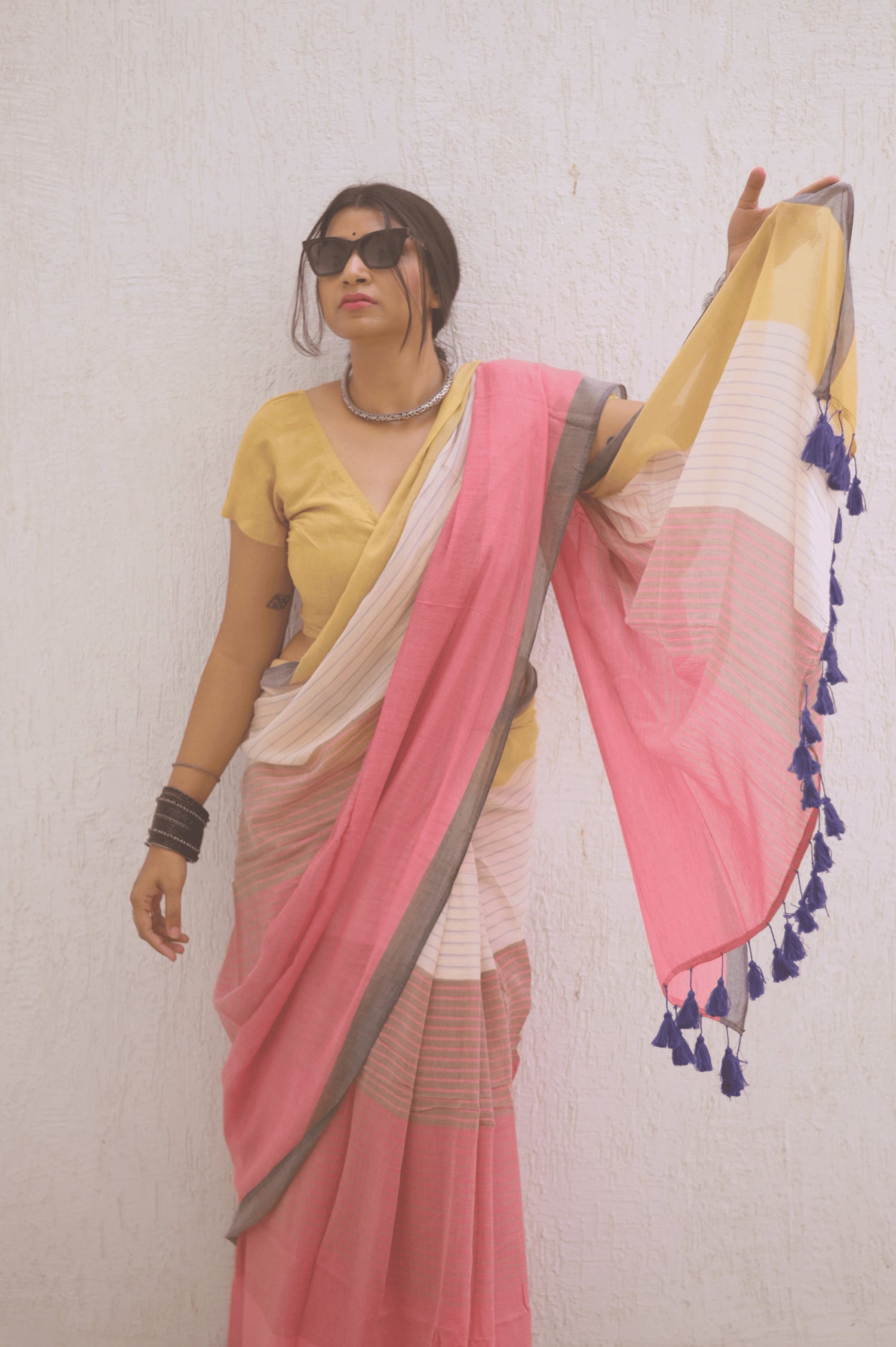
At MAYIN, Mauve Melody, a plain pink mul modal, is ₹1,899 and comes with a 1 m running blouse piece in the same fabric. Bright Side, a white mul cotton with a yellow border, is ₹1,999. The handloom linens with zari borders are ₹4,499. You can see more in our sarees under ₹2,000 and college sarees collections. Remember the blouse: a saree without a blouse piece means buying fabric or a readymade blouse as well, so add that to the budget.
Borrowing Your Mother's Saree
A mother's or grandmother's saree is often the best thing anyone wears on traditional day. It also needs a little more care, because it may be older than you and may not have been opened in years. Do these checks two or three days before, not on the morning.
Folds matter more than people think. Textile conservators advise keeping folding to a minimum and refolding stored textiles regularly, because creases that sit in one place can damage the fibres. When you return the saree, fold it along new lines, not the old ones, and wrap it in a cotton cloth.
Quick Blouse Fixes
The blouse is where most traditional day plans go wrong, especially with a borrowed saree. Your mother's old blouse may be too loose, too tight or missing altogether. Some fixes take five minutes with pins; others need a tailor and two or three days.

Before you ask a tailor to let out a seam, turn the blouse inside out and look at how much spare fabric there is in the seam. If there is very little, letting it out will not work and a new blouse is quicker. Take the saree with you so the tailor can match the colour of any added piece. For readymade options and sizes, see our readymade blouse guide.
What to Carry in Your Bag
A saree has no pockets and a full day has a few surprises. Carry a small bag on your right shoulder, so the left shoulder, where the pallu sits, stays free and the pallu does not get dragged out of place.
If you plan to change after college, wear the saree over a fitted top and leggings or cycling shorts rather than only a petticoat. It makes changing in a washroom much quicker.
Sarees for Traditional Day
These MAYIN sarees suit a full day at college or work. Every MAYIN saree is 5.5 m long and 45 inches wide. The mul cottons are light and soft for a long day; Bright Side and Dusty Petal take a gentle cold hand wash, and Siyaahi, with its zari stripes, is dry clean. Mauve Melody and Regal Pin Drop are mul modal, with a 1 m running blouse piece in the same fabric and a gentle cold hand wash. The three linens, Main Event, On Repeat and Composure, have zari borders, a 1 m blouse piece and are dry clean; they look the most traditional of the group. You can see all of them in our linen sarees and college collections.
 Bright SideWhite mulmul cotton with yellow borderPair with Yellow, red, green
 Main EventBurgundy red pure handloom linen with zari borderPair with Gold, cream
 On RepeatYellow handloom linen with zari borderPair with Maroon, green
 ComposurePink pure handloom linen with zari borderPair with Gold, green
 SiyaahiMulticolour striped mul cotton zariPair with Black, gold
 Mauve MelodyPlain pink mul modalPair with Maroon, silver
 Regal Pin DropMaroon red polka dot modal cottonPair with Black, white
 Dusty PetalMauve pink gingham mulmul cottonPair with White, maroon
Questions People Ask
Which saree is best for traditional day in college?
A light saree you can wear for seven or eight hours: mul cotton, mul modal, a handloom cotton or linen. Save heavy silks for days that are mainly events, not classes.
What can I wear on traditional day if I do not have a saree?
Borrow one from family or a friend, or wear any traditional outfit if your college allows it. Most traditional day circulars accept more than sarees.
How do I look different on saree day?
Pick a story rather than a price: a family saree, a weave from your home state or a regional drape you have practised. A neat drape and one good piece of jewellery do the rest.
Can I wear my mother's saree for traditional day?
Yes, and it is often the best choice. Check it in daylight for weak spots along old folds, drape it once to check the length, and sort out the blouse a few days before.
What if my mother's blouse does not fit?
Pin a loose blouse on the inside of the side seams, or wear a plain readymade blouse or fitted top in black, white, gold or the border colour. A tailor can take in or add a dori in a day or two.
Is a silk saree too heavy for a college day?
For a full day of classes, usually yes. Silk is warmer and heavier than cotton or linen, so wear it if the day is mostly events, or keep it for the evening.
Can I wear sneakers with a saree on traditional day?
Yes, if your college is relaxed about it. Set the hem in the sneakers you will wear, so it sits just above the floor.
How do I manage a saree in the washroom?
Gather the pleats and lift the saree from the knee rather than pulling at the waist. A firmly tied petticoat and a pin inside the pleats keep the tuck in place.
What should I carry on saree day?
Spare safety pins, a hair tie, a small mirror, tissues, water and a shawl for cold mornings. A small bag carried on the right shoulder keeps the pallu on your left shoulder in place.
What are good group theme ideas for traditional day?
Home-state weaves, one colour, a two-colour split, plain sarees with borders, or everyone in a mother's saree. Pick themes people can join without buying anything.
When is traditional day usually held?
It varies by college, but it often falls in December and January, near the end of term, World Saree Day on 21 December or Republic Day. See our Republic Day saree guide for that day.


