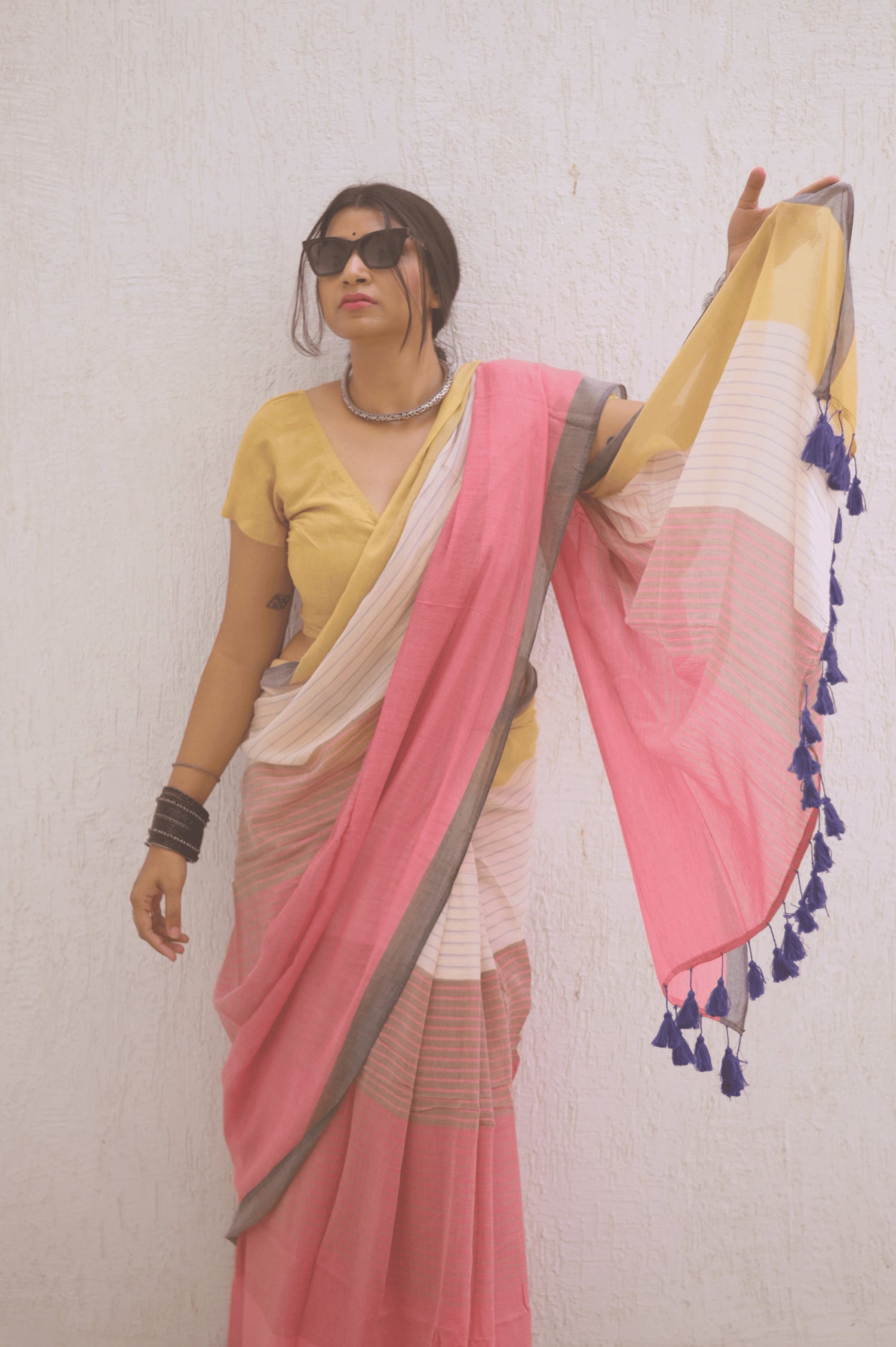


Salem Silk Saree: Salem and Elampillai Silk, GI, Weight, Price and Care

A Salem silk saree is a silk saree woven in and around Salem, a weaving district in western Tamil Nadu, about 334 km from Chennai. The name covers two quite different things: handloom pure mulberry silk sarees from villages such as Chinthamaniyur and Semmandapatty, and soft, lighter jacquard sarees from the power looms of Elampillai, many of which are art silk rather than pure silk. This guide explains what the Salem Silk GI tag actually protects, where the sarees are made, how the borders and weight differ from Kanjivaram and Arani, how to check the silk and zari, what you should expect to pay and how to look after one.
What a Salem Silk Saree Is
Pattu is the Tamil word for silk, and Salem has woven it for centuries. When the East India Company set up its cloth "investment" in the district in 1792, the GI record notes, there were 1,963 looms in the area, and 598 of them were working for the Company. Salem is still known for silk dhotis, cotton dhotis and silk sarees.
Today, a saree sold as "Salem silk" usually falls into one of three groups, and the label alone will not tell you which one you are holding.
Salem sarees have never had the fame of Kanjivaram, partly because so much of the district's silk has been sold under other names. The Salem district website itself notes that many shops in Kanchipuram sell sarees made in Salem. So the useful question is not "Is it Salem silk?" but "Is it handloom or power loom, pure silk or not, and what is the zari?" The rest of this guide is about answering those three questions. For the basics of silk itself, see our guide to types of silk sarees.
The Salem Silk (Venpattu) GI and What It Covers
Salem Silk, also registered as Salem Venpattu, is a Geographical Indication. The application (number 94) was filed on 16 May 2007 by the Department of Handlooms and Textiles, Government of Tamil Nadu, and the certificate (number 56) is dated 28 March 2008. It is registered for textiles and clothing.
Here is the part most shopping pages leave out. The GI description is built around white silk: dhotis, angavastrams (the upper cloth worn with a dhoti) and silk shirting, traditionally worn at weddings and festivals. A korvai variety is mentioned too. Sarees as such are not the focus of the record.
If a seller calls a saree "GI tagged Salem silk", ask what exactly they mean. For how GI tags work and which sarees have them, see our guide to GI tag sarees, and for the separate fibre label, Silk Mark and Handloom Mark.
Where Salem Silk Sarees Are Woven
Salem is a district, not one workshop, and the weaving is spread across towns and villages with quite different ways of working.
Elampillai deserves a closer look, because it is where most people's "Salem silk" search ends. A saree maker there told The Hindu of more than 20,000 power looms, with power looms taking over by the 1970s. One saree of about 6.3 m takes roughly six hours on a power loom. The sarees are soft, with a self design woven in on a jacquard, and the same report noted that art silk and Kota cotton were among the best sellers. The saree maker added that weavers recognise an Elampillai saree by the way it falls, not by any label.
Features of the Weave and Borders
A Salem silk saree usually has a plain or lightly patterned body with a zari border and a richer pallu. Jacquard weaving is common, both on handlooms and power looms, so small buttas, checks and self patterns are woven into the body rather than printed.
The border tradition
The GI record lists the border designs Salem weavers have used on silk, and you will still see many of them on sarees. The record gives border widths of about 2 to 6 inches. Alongside the zari, weavers use nimili, a coloured silk yarn, to make the zari border stand out.
Korvai and plain borders
The GI record mentions a korvai variety, a solid border design woven on the throw shuttle loom; in korvai weaving the border and body are interlocked. The same record says the bulk of Salem silk dhotis are woven on fly shuttle looms, with jacquards used for borders. Jacquard borders are common on Salem sarees too, which can make them quicker to weave and lighter than a korvai Kanjivaram. If a seller says "korvai", look at the reverse: in a true korvai, the line where the border meets the body shows small interlocking joins. For more on these borders, see our guide to temple border sarees.
Weight and Drape: Why Salem Silk Often Feels Lighter
Many buyers choose Salem silk because it is easier to wear than a heavy wedding silk. That is often true, but not always: weight depends on the yarn, the density of the weave and above all how much zari is used. The best way to compare is to ask the seller for the weight in grams.
In practice, a lighter Salem silk sits comfortably for a long day, a temple visit or an office function. It drapes closer to the body, so pleats fall flatter and the pallu moves more. A heavy Salem wedding silk, with a deep zari border, behaves much like any other wedding silk and needs the same care when you pleat it. Our soft silk saree guide explains what "soft silk" means on a label, which is a common way lighter Salem sarees are sold.
Salem, Kanjivaram and Arani Compared
These three are all Tamil Nadu silks and they are often confused, sometimes on purpose. Here is how they usually differ. For the full story of each, read our Kanjivaram saree guide and Arani silk saree guide.
The honest comparison is not "which is better" but "which suits the day". A Kanjivaram with a korvai border and heavy zari is a bridal and heirloom saree. A Salem or Arani silk gives you the look of a South Indian silk with a lighter feel and a lower price. And because Salem sarees have been sold as Kanjivaram, a very cheap "Kanjivaram" may well be from Salem, and may not be silk at all. Our Kanjivaram vs Banarasi guide covers how heavy wedding silks compare more widely.
How to Check Pure Silk and Zari
In 2023, DT Next reported, citing Kanchipuram weavers, that some shops were buying duplicate "pattu" sarees from manufacturers in Salem and Bengaluru and selling them with copied Silk Mark tags. That does not make Salem silk suspect; it makes checking sensible wherever you buy. No single home test is final, so use several clues together.
The burn test works on a loose thread a seller gives you, never on your own saree. Silk shrinks from the flame, burns slowly, usually goes out when taken away from the flame, smells like burnt hair and leaves a dark ash that crumbles easily. Cotton and rayon burn readily and smell like burning paper; polyester melts into a hard bead. Never burn or scrape zari. Our art silk saree guide explains how to tell viscose from silk, and our zari saree guide covers real, tested and metallic zari in detail.
Price Ranges in 2026
Prices vary with fibre, weight and zari far more than with the name. As of 2026, roughly, this is what buyers can expect. Treat these as bands, not quotes.
A "pure silk" Salem saree at a power loom price is a warning sign. So is a large markup on a saree described as Kanjivaram when the seller cannot tell you where it was woven. Our saree price guide explains what drives prices across weaves.
Occasions and How to Style It
A lighter Salem silk is one of the most useful silks to own because it works across many occasions. A heavier one is a proper wedding saree.
For the blouse, the border usually leads. A contrast blouse in the border colour works well on a plain body, and placing a strip of border on the sleeve hem is a classic South Indian finish. Our silk saree blouse designs guide shows where to place the border. For a temple day, see what to wear for a temple visit. Lighter silk pleats more neatly with 7 to 9 pleats of about 4 to 5 inches each; heavier silk often looks better with fewer, wider pleats.
Caring for a Salem Silk Saree
Pure silk with zari is safest with dry cleaning, especially for the first few washes. Many lighter silks are sold with a "dry clean first" label, and the care is the same as for any good silk.
For more detail, see how to store silk sarees, how to wash a silk saree and how to clean a zari saree.
Lighter Sarees With a Zari Border
The sarees below are pure handloom linen, handloom tissue and mul cotton. They are lighter MAYIN sarees that give a similar zari border look for pooja, festivals and long days, with less weight and easier wear. Our pure handloom linen sarees with zari borders cost ₹4,499 and come with a 1 m blouse piece. The tissue saree and the Siyaahi mul cotton zari saree come without a blouse piece. All of these are dry clean. Every MAYIN saree is 5.5 m long and 45 inches wide.
 Main EventBurgundy red pure handloom linen with zari borderPair with Gold, maroon, cream
 On RepeatYellow handloom linen with zari borderPair with Maroon, green, gold
 ComposurePink pure handloom linen with zari borderPair with Gold, green, wine
 Miss Earth Tissue SareeMiss earth tissuePair with Maroon, emerald, gold
 SiyaahiMulticolour striped mul cotton zariPair with Black, gold, white
Browse more in zari sarees, linen sarees and tissue sarees. Delivery is free in India on orders of ₹2,000 and above.
Questions People Ask
Is Salem silk pure silk?
Handloom Salem silk sarees from villages such as Chinthamaniyur are usually pure mulberry silk, and some carry the Silk Mark. Many power loom sarees from Elampillai are art silk or blends, so always ask for the fibre on the bill.
Does Salem silk have a GI tag?
Yes. Salem Silk, also called Salem Venpattu, was registered as a GI, with the certificate dated 28 March 2008. The record is built around white silk dhotis, angavastrams and shirting rather than sarees.
What is Salem Venpattu?
Venpattu means white silk in Tamil. It refers to the bright white silk dhotis and angavastrams of Salem, prized for their sheen and worn at weddings and festivals.
What is the difference between Salem silk and Kanchipuram silk?
Kanjivaram sarees are usually heavier, with korvai borders and more zari, and cost more. Salem silk sarees are often lighter, more often jacquard woven, and more affordable, though heavy Salem wedding silks exist too.
Are Elampillai sarees pure silk?
Some are, but most Elampillai sarees are power loom sarees in art silk, blends or cotton, valued for their softness and low price. Check the label and bill before paying a silk price.
What is the price of a Salem silk saree?
As of 2026, roughly, lighter handloom pure silk Salem sarees often start at about ₹7,000, and heavy wedding pieces often cost ₹15,000 to ₹20,000 or more. Power loom Elampillai sarees cost far less. Prices vary by seller, weight and zari.
Is Salem silk saree heavy?
Many are fairly light, often under 500 g, which is why they are popular for long days. Heavy wedding pieces with temple borders and zari buttas can weigh around 900 g or more, so ask for the weight.
How do I identify an original Salem silk saree?
Ask for the fibre and zari type in writing, check the selvedge and the reverse of the border, and look for a Silk Mark tag from a seller you trust. A burn test on a loose thread is a clue, not proof.
Is Salem silk good for a wedding?
A heavy handloom Salem silk with a wide zari border suits brides and close family. A lighter one is a comfortable choice for wedding guests and other functions.
Which is better, Salem silk or Arani silk?
Neither is better in itself. Both are Tamil Nadu silks that are usually lighter and more affordable than Kanjivaram; choose by weight, border and zari rather than the name.
How do I wash a Salem silk saree?
Dry clean pure silk with zari, at least for the first few washes. Air it in the shade after wearing and store it wrapped in cotton, refolding every few months.
Where are Salem silk sarees made?
In Salem district, Tamil Nadu: power loom sarees mainly in Elampillai, and handloom silk in villages such as Chinthamaniyur, Semmandapatty and Panchukalipatty.


