Padded Blouse Guide: Cup Types, Stitching, Fit and Care
By Nishita Nathani17 min read
A padded blouse is a saree blouse with bra cups sewn inside, between the outer fabric and the lining, so it gives shape and cover without a separate bra. It is what makes a backless, halter, off-shoulder or deep-neck blouse wearable, because there are no straps or bands to hide. Below: the five kinds of cup a tailor will offer, how they are stitched in, how to get the fit right at the trial, which designs really need padding, and how to wash a blouse with foam inside it.
Shop the edit: our sarees with a blouse piece bring together chiffon, linen and mul modal sarees that come with fabric for a blouse, ready to take to your tailor.
Padded blouse at a glance
5 cupsLightly lined, moulded, push-up, removable or stitched fabric
2 layersCups sit between the outer fabric and the lining
2 trialsOne to place the cups, one to check the finished fit
Gentle careNo hot water, wringing, dryer or iron on the foam
A plain blouse is a fitted bodice. You wear a bra under it and the bra does the shaping. In a padded blouse the shaping is built in. A pair of cups is fixed to the lining at the bust, the outer fabric is stitched over them, and the blouse does the work of a light bra. Some people call it a blouse with cups, a built-in bra blouse or a cup blouse. The idea is the same as the built-in bra in a swimsuit or an evening dress.
There are three reasons people ask for one. The first is cover: a light layer of foam stops the outline of the body showing through thin fabric. The second is shape: a moulded cup holds a smooth, round line under silk, chiffon or brocade, so the blouse does not wrinkle across the bust. The third, and the big one, is the back: once the cups are inside, there is no bra band or strap to show in a backless, halter, off-shoulder or sleeveless blouse.
Good to know
Padding is about the cup, not the cut. A katori blouse or a princess cut blouse can be made with or without foam cups. For how those two cuts shape the front, see princess cut vs katori blouse.
The Five Types of Blouse Cups
Many tailors and blouse shops stock ready-made cups that are sewn in rather than cut from scratch. They differ in two ways: how thick the padding is, and where the thickness sits. Sew-in cups are usually foam covered in a thin polyester fabric, sold in shapes such as round, teardrop, push-up and low-cut, and the foam can usually be trimmed to fit a neckline.
The five cups you will usually be offered. The side cut shows where the padding sits: even and thin, even and thicker, deeper at the base for lift, as a loose pad, or none at all.
Which cup does what
CupWhat it doesBest for
Lightly lined foamA thin, even layer that smooths and covers, adds little volumeThin chiffon or crepe blouses, everyday wear, a fuller bust that wants cover, not size
Moulded (contour) cupSeamless pre-shaped foam that holds a round shape even off the bodySilk, brocade and sequin blouses, sweetheart and deep necks, a smooth line under heavy fabric
Push-up cupThicker padding at the base and outer edge lifts the bust up and inPlunging or sweetheart necks where you want lift; a smaller bust that wants more shape
Removable padsLoose pads slipped into pockets in the liningBlouses you will wash at home, or when you want to change how much padding you wear
Stitched fabric cupCloth cups shaped by seams or darts, no foamCotton blouses and hot days; support from the cut, as in a katori blouse
Two cup shapes are worth naming at the shop. A balcony or balconette cup is cut straight across the top and lifts upward, which suits square, wide and off-shoulder necks. A plunge cup is angled and low at the centre, which suits a deep V or a deep sweetheart neck. If the neckline dips lower than the cup, the cup will show, so take the neck drawing with you when you choose.
Padded or Non-Padded: Which to Choose
Neither is better. It depends on the back of the blouse, the weight of the fabric, the weather and how long you will wear it.
Padded vs non-padded blouse
PaddedNon-padded
Under itUsually no bra neededA bra that suits the neck and back
Backs it allowsBackless, halter, strappy, off-shoulder, deep backsClosed and moderate backs, or a deep back with a matching bra
ShapeSmooth and set, holds its line under heavy fabricFollows your bra and your body
Comfort in heatWarmer, as foam traps heatCooler and more breathable
WashingGentle hand wash or dry clean, no heatEasier, as the label allows
AlterationsHarder, the cups may need movingSimpler to take in or let out
Best forWeddings, receptions, parties, long eveningsOffice, college, daily wear, summer
A simple rule: if the bra would show, pad the blouse. If it would not, choose padding only when you want the shape or cover it gives. For what goes under a saree with each kind of blouse, see what to wear under a saree.
Which Blouse Designs Need Padding
Some designs are close to impossible without cups, because every bra strap or band would show. Others are a matter of choice.
Padding by blouse design
DesignPaddingWhy
Backless or tie-backNeededThere is no back to hide a bra band. Cups plus a firm under-bust band hold the front up.
Halter neckNeededStraps go round the neck, so a normal bra strap shows at the shoulder.
Off-shoulder or straplessNeededNothing crosses the shoulder; cups and a snug band carry the weight.
Noodle strap or strappy backNeededThin straps cannot cover bra straps, and a bra band shows at the back.
Deep back (below the bra band)UsuallyA bra band would cross the opening. Pad, or wear a low-back bra.
Sweetheart or deep V frontOftenA moulded or plunge cup keeps the neckline edge smooth and stops gaping.
Sheer or net blouseOftenCups give cover under a sheer yoke or sheer body.
Sleeveless with a closed backOptionalA bra works if the armhole sits close; pad for a clean line.
Round, boat or high neck, closed backOptionalA good bra is enough. Pad only for shape or cover.
Open backs are where cups earn their place: once the bra band is gone, the cups and a firm band at the waist hold the blouse.
A good tailor fixes the cups to the lining, never to the outer fabric, so no stitches show on the outside. The order matters more than the method.
How a tailor sets cups in: centre them on your bust points at a trial, fix them to the lining so nothing shows outside, and finish the seams only after a second try-on.
From fabric to finished padded blouse
1
Choose the cups with the neck drawingPick the cup type and shape against the neckline. The cup edge must sit below the neck edge all round, or it will peep out.
2
Cut and tack the lining firstThe lining is cut to the same pattern as the blouse front and tacked together loosely, so you can try it on.
3
First trial: place the cupsWith the lining on, the tailor pins the cups so the centre of each sits on your bust point. Check both sides in a mirror; they should be level.
4
Fix the cups to the liningEither small hand tacks at four to six points round each cup, about a quarter inch (roughly 6 mm) in from the edge, or a line of machine stitching round the edge before the lining is joined.
5
Trim or fold the edgesFoam can be trimmed at the neckline. A raw foam edge is folded in or finished so it does not wear through the fabric.
6
Join outer fabric and liningThe outer fabric goes over the cups and the two layers are stitched together at the neck, armholes and hem.
7
Second trial before the final seamsCheck the cups have not shifted, the neckline lies flat over them, and the blouse closes without strain.
If you want to take the pads out
Removable pads go into small pockets of lining fabric, open along the top edge. Some tailors prefer this for blouses that will be washed at home, because the pads come out first. Ask for it at the start, as the pockets are stitched before the lining goes in.
Getting the Fit Right
Most padded blouse problems come from one of three things: cups in the wrong place, the wrong cup size, or a band that is too loose to hold them. The full set of blouse measurements is in our blouse measurement and fitting guide; these are the ones that matter most once cups go in.
Measurements that place the cups
MeasurementHow it is takenWhy it matters here
BustRound the fullest part, tape level at the backSets the size of the cups and the blouse. Take it over a bra of a similar shape to the cup you want.
Shoulder to bust pointFrom the shoulder near the neck down to the bust pointSets how high the cups sit. Too short and the cups ride up; too long and they sit low.
Bust point to bust pointStraight across between the two bust pointsSets how far apart the cups go. Wrong here and the cups pull outward or crowd the centre.
Under bustSnug round the ribcage just below the bustSets the band. In a backless or strapless blouse the band carries most of the weight.
Blouse lengthFrom the shoulder to where the blouse should endA longer blouse, ending well below the bust, holds the cups more steadily.
At the trial, check that
The centre of each cup sits on your bust point, and the two cups are level.
There is no gap between the cup edge and your body at the top or the sides.
The cup edge does not dig in at the underarm or show above the neckline.
The neckline lies flat over the cups when you sit and lift your arms.
The band is snug: you can slide two fingers under it, not your whole hand.
The blouse closes without the hooks or zip pulling across the bust.
For an open back, the blouse stays up when you lean forward.
Ask the tailor to leave extra seam allowance inside the side seams, often about an inch or a little more. Padded blouses are harder to alter than plain ones, and spare allowance is what makes it possible later. It is easier to take a blouse in than to let it out.
Padding by Bust Size
The right padding depends less on size than on what you want from it: cover, shape, lift or support.
What to ask for
Smaller bustMoulded or push-up cups add shape so the blouse does not sit flat or wrinkle. A sweetheart or square neck shows the shape well.
Medium bustLightly lined or moulded cups. Many people can skip the bra with medium padding and a good fit.
Fuller bustLightly lined, well-fitted cups for cover, not size, on a firm band with hooks, a longer blouse and wider straps or sleeves. A supportive bra may still be needed.
Between sizesChoose the slightly larger cup and let the tailor trim the edge, rather than a cup that is too small and leaves a ridge.
Cups need a lining to be fixed to, so a padded blouse is always lined. The outer fabric decides how much the foam shows through and how warm the blouse feels.
Outer fabric and padding
FabricWith cupsWhat to watch
CrepeWorks well; drapes smoothly over a moulded cupA light cup is enough; heavy foam can look stiff under soft crepe
Silk and brocadeWorks well; the classic party and wedding padded blouseHeavier fabric hides cup edges; choose moulded for a smooth line
Sequinned or embroidered fabricWorks well; the cup supports the weight of the workKeep the cup edge out of the way of heavy work at the neckline
Chiffon, net, organzaWorks with a full lining; cups give coverCup edges can show through; match lining colour to skin or fabric
LinenPossible with light cupsCrisp linen shows edges; lightly lined or fabric cups suit it best
CottonUsually better unpadded or with fabric cupsFoam makes a cotton blouse warm in summer
A cotton lining is the comfortable choice next to the skin for long wear. For how much lining to buy and which colour to choose, see our blouse lining guide. If you are stitching from the 1 m crepe blouse piece that comes with a chiffon saree, our chiffon saree blouse designs has cuts that suit it.
Readymade Padded Blouses and Adding Cups Later
Readymade padded blouses are sold by bust size, often in stretch fabric with cups already sewn in. They are quick, but the cups are placed for an average figure, so check the bust points line up with yours before the event. Padding is also harder to alter than a plain blouse, so buy for the bust and alter the waist, not the other way round. Our readymade blouse guide covers sizes and alterations.
Adding cups to a blouse you already own
When it worksThe blouse is lined, fits well at the bust, and the neckline sits above where the cup edge will go.
How it is doneTry the blouse on, pin the cups in place, then hand tack them to the lining at four to six points, catching only the lining.
When it does notAn unlined blouse needs a lining added first. A blouse that is already tight at the bust will be tighter with foam inside.
How to Wash and Store a Padded Blouse
Two things damage a padded blouse most often: heat and twisting. Heat can soften and misshape foam, and wringing can crease it for good. Follow the care for the outer fabric first. A silk, brocade or sequinned blouse goes to the dry cleaner anyway; tell them it has foam cups and ask them not to press over the cups.
Hand washing a padded blouse
1
Check the outer fabricWash at home only if the fabric itself can be washed. If you have removable pads, take them out and wash them separately.
2
Use cold waterCold or lukewarm water with a little mild detergent. Never hot water.
3
Press, do not scrubSoak briefly and press the suds through the cups with your palm. Do not rub the cups against each other.
4
Rinse wellRinse until the water runs clear, as leftover detergent stays in foam.
5
Do not wringSqueeze gently, then roll the blouse in a dry towel and press to take out the water.
6
Reshape and air dryPush each cup back into shape with your hand and dry in the shade. No dryer.
Pressing and storing
Never iron over the cups. Press the rest of the blouse from the inside on low heat, keeping the iron away from the foam.
Store it flat with the cups facing up, or nest one cup inside the other. Do not fold across the cups.
Keep padded blouses on top of a pile, not under heavy sarees.
Air it after wearing before you put it away, as foam holds sweat.
Sarees in This Guide
Padded blouses come into their own with partywear. These MAYIN sarees come with a blouse piece you can have stitched with cups. The chiffon sarees come with a 1 m crepe blouse piece, which drapes well over a moulded cup; Main Event comes with a 1 m blouse piece, and True Garnet with a 1 m running blouse piece in the same fabric.
Which padded blouse with which saree
StarletWine sequin pure chiffon, ₹5,999. A sweetheart or deep back crepe blouse with moulded cups for a reception. Dry clean.
MidasResin gold sequin pure chiffon, ₹7,999. A halter or strappy back with cups and a firm band. Dry clean.
SocialiteOld rose sequin chiffon, ₹3,499. Off-shoulder or sleeveless with lightly lined cups. Dry clean.
Damask RosePink hand painted chiffon, ₹3,499. A deep U back with light padding for a day function. Dry clean.
Main EventBurgundy handloom linen with zari border, ₹3,999. A boat neck with fabric cups or a lightly lined cup. Dry clean.
True GarnetPlain maroon mul modal, ₹1,899. A simple sleeveless blouse; unpadded or lightly lined for comfort. Gentle cold hand wash.
For more partywear that suits a padded blouse, see our sequin sarees. Free delivery in India on orders of ₹2,000 and above.
Questions People Ask
What is a padded blouse?
A saree blouse with bra cups sewn inside, between the outer fabric and the lining. It gives shape and cover, so you can usually wear it without a bra.
Can I wear a padded blouse without a bra?
Usually, yes, if it fits well at the bust and the band is snug. With a fuller bust you may still want a supportive bra for long wear.
Does a padded blouse make the bust look bigger?
Lightly lined and moulded cups mainly smooth and shape. Push-up cups add lift and some volume.
Which blouse designs need padding?
Backless, halter, off-shoulder, strapless and noodle strap blouses, and deep backs that fall below the bra band. For round, boat or high necks with a closed back, padding is optional.
How do tailors attach cups in a blouse?
They fix the cups to the lining, either with small hand tacks round the edge or a line of machine stitching, then sew the outer fabric over them. The cups are placed at a trial with the lining on.
How do I choose the right cup size for a blouse?
Take your bra to the shop and match the cup to it, and give your tailor your bust and under-bust measurements. If you are between sizes, choose the slightly larger cup.
Can padding be added to an old blouse?
Yes, if the blouse is lined and not already tight at the bust. Cups are pinned with the blouse on, then hand tacked to the lining.
Is a padded blouse good for a heavy bust?
It can be, with lightly lined cups for cover, a firm band, hooks rather than only a dori, and wider straps or sleeves. Avoid push-up cups if you do not want extra volume.
How do I wash a padded blouse?
Follow the outer fabric’s care. If it can be washed, hand wash in cold water, do not wring, press out water in a towel and air dry with the cups reshaped.
Can I iron a padded blouse?
Not over the cups, as heat can misshape foam. Press the rest of the blouse from the inside on low heat.
Are padded blouses comfortable in summer?
Foam is warmer than plain fabric. For hot days, choose a cotton lining, lightly lined or fabric cups, or skip the padding.
Can a padded blouse be altered?
Yes, but it is harder than a plain blouse because the cups may need moving. Ask for extra seam allowance inside the side seams, often about an inch or a little more, when it is first stitched.
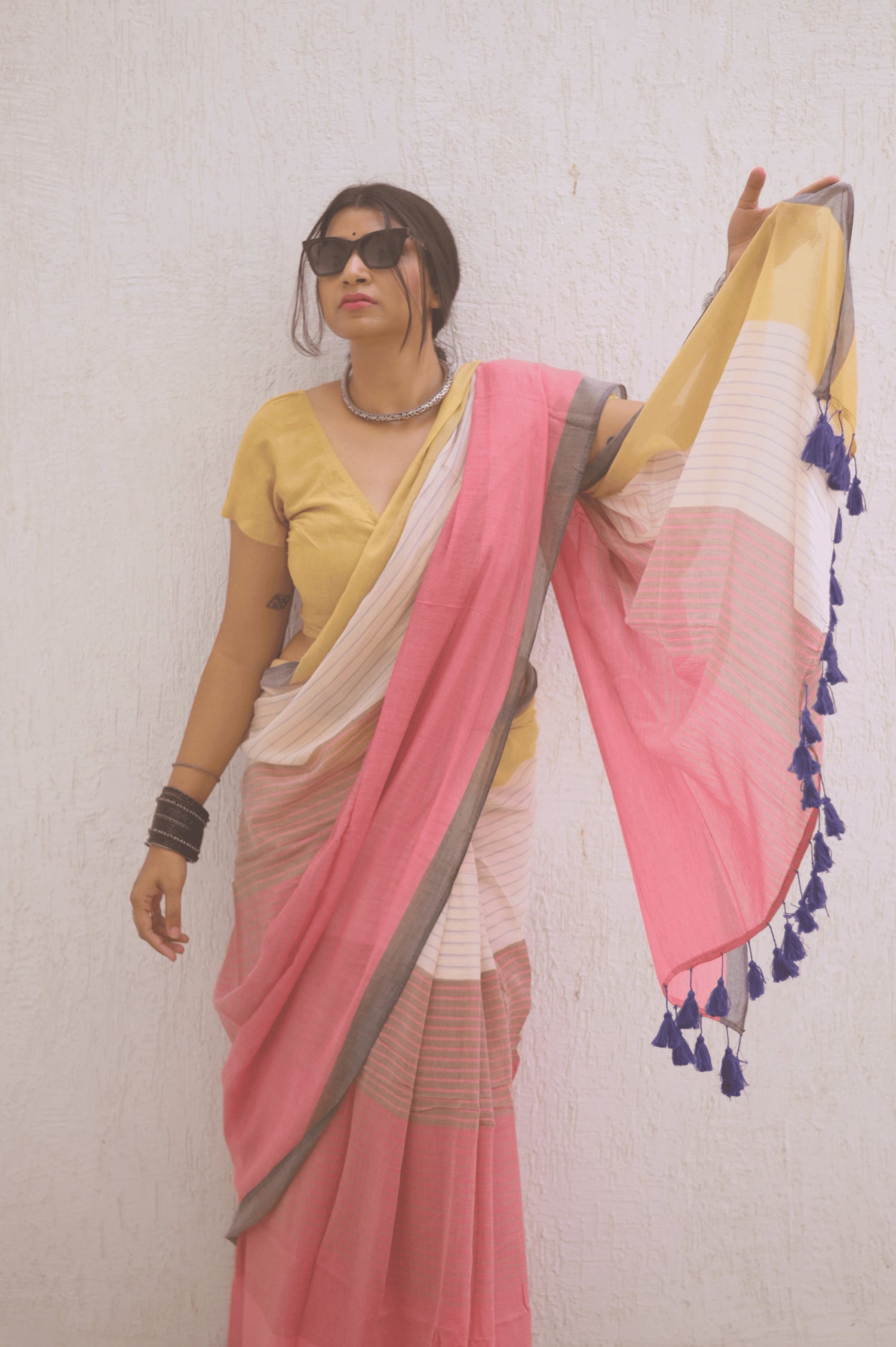


 StarletWine sequin pure chiffonPair with Gold, black
 MidasResin gold sequin pure chiffonPair with Gold, maroon
 SocialiteOld rose sequin chiffonPair with Blush pink, silver
 Damask RosePink floral hand painted chiffonPair with Pink, green
 Main EventBurgundy red pure handloom linen with zari borderPair with Gold, maroon
 True GarnetPlain maroon red mul modalPair with Gold, black


