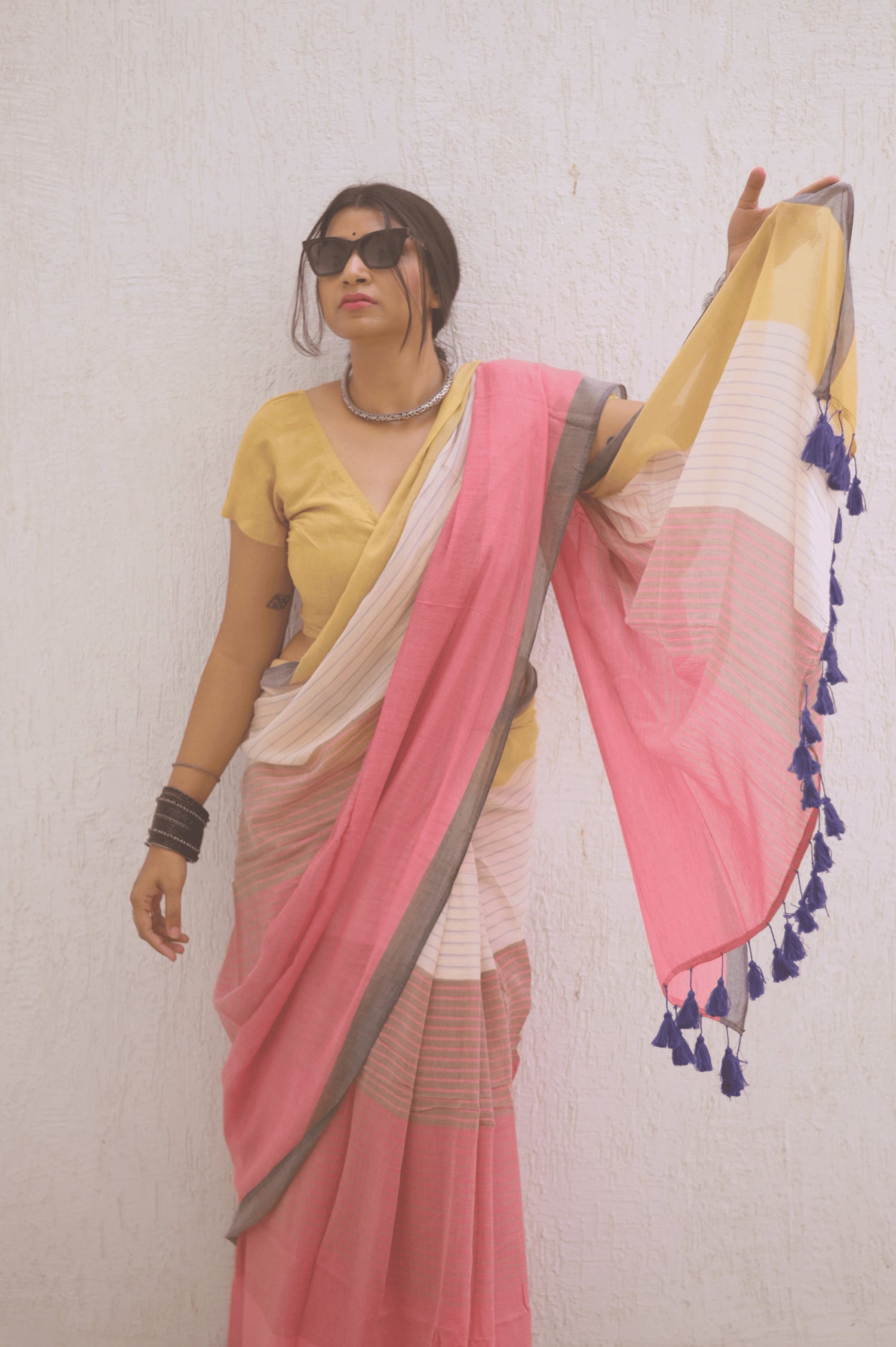


Bridal Trousseau Sarees: How Many, Which Ones and How to Plan Them

A bridal trousseau usually needs one saree for each wedding function you will wear a saree to, plus a smaller set for the first year of married life: post-wedding pujas, family visits, the first festivals and, for many brides, going back to work. Count those occasions first, then decide the weave, colour and budget for each, so you end up with a wardrobe that works together rather than a pile of heavy silks you wear once. This guide is about planning the whole set. For choosing the wedding saree itself, read the bridal saree guide.
How Many Sarees Go in a Bridal Trousseau
There is no fixed number. A bride with three functions and a family that wears salwar suits at home needs far fewer sarees than a bride moving into a joint family where sarees are worn to every puja and visit. The honest answer is to count your own calendar.
Once you have the list, sort it into three tiers. This is the single most useful step, because it stops the budget going entirely on heavy silks.
Wedding Functions, Saree by Saree
Every family runs the wedding differently, so use this as a starting map and change it to match your own rituals. The key idea is that each function has its own time of day, setting and amount of sitting, standing or dancing, and the saree should suit all three.
The reception saree deserves its own planning, because it is the look where the bride often chooses most freely. Our guide to the reception saree for the bride goes through colour, fabric and stage lights, so here it is simply one line of the plan.
The First Year After the Wedding
This is the part of the trousseau most brides under-plan. The weeks after the wedding bring a run of occasions where the new bride is introduced, blessed and invited, and she is often expected to look festive without wearing her wedding saree again.
Some festivals carry special meaning for a new bride. On Karwa Chauth, the mother-in-law traditionally gives the sargi, the meal eaten before dawn, and on her first one a new bride often wears red or another festive saree; in some families she wears her wedding outfit again. In Maharashtra, newly married women traditionally keep the Mangala Gauri vrat on the Tuesdays of Shravan for the first five years of marriage, though customs vary by family. Ask your new family which days matter to them, and plan a saree for each. Our Karwa Chauth saree guide covers that evening in detail.
For the sarees you will wear on ordinary days at your new home, see our separate guide to daily wear sarees for a new bride. In short, those should be light, quick to drape and easy to wash.
Mixing Weaves and Weights
A good trousseau has a spread of weaves. Heavy handwoven silks carry the ceremonies, but a whole cupboard of them is hard to wear in hot months, expensive to care for and too formal for most of the first year. Think of weight and occasion together.
A simple rule of thumb: for every heavy silk, buy two or three lighter sarees. You will wear the light ones far more often, and they keep the heavy silks fresh for the occasions that need them.
Regional Sarees Many Brides Include
In many communities one or two trousseau sarees are fixed by tradition, and they often come from the bride's own family or from her in-laws. Find out early which saree is expected for which ritual, as some regional weaves take weeks to source or weave to order.
Each of these has its own guide on our site. Start with the South Indian bridal saree guide, the Paithani guide and the mekhela chador guide.
Splitting the Budget
Trousseau budgets go wrong when the wedding saree takes almost everything and the first year is left with nothing. Set the total first, then divide it by tier. Prices of handwoven silks vary widely by weave, zari and maker, so check current prices for your chosen weaves; our saree price guide explains what drives the cost.
These shares are a planning suggestion, not a rule. If a family heirloom covers the wedding saree, move that share to the festive tier. Remember that blouse stitching for several sarees, with lining, work and alterations, adds up quickly and is the cost brides forget most often.
Blouse Stitching Timeline
With eight to fifteen blouses to stitch in the busy wedding months, the tailor's calendar decides your timeline more than the shops do. Work backwards from the first function, not from the wedding day.
Get the measurements taken once, properly, and keep a written copy for every tailor. Our blouse measurement and fitting guide covers how to measure and what to check at each trial, so we will not repeat it here.
Checks Before You Buy
Trousseau sarees are often the most expensive sarees a woman buys, and many will be handed down. A few minutes of checking at the counter saves regret later.
Our guide to Silk Mark and handloom labels shows what each label looks like and what it does and does not promise.
Storing and Labelling the Trousseau
Trousseau sarees are often bought months before the wedding and then travel to a new home. How you store them in between decides how they look on the day.
For more on caring for silks after the wedding, see how to store silk sarees.
Sarees in This Guide
These MAYIN sarees belong to the lighter half of the trousseau: reception parties, first festivals, family visits and the office, rather than the ceremony itself. Every MAYIN saree is 5.5 m long and 45 inches wide. The sequin, linen, tissue and jamdani sarees are dry clean only; Regal Pin Drop and Mauve Melody are mul modal with a 1 m running blouse piece in the same fabric and take a gentle cold hand wash.
 RubyRed gold sequin pure chiffonPair with Gold, red
 EmeraldGreen gold sequin pure chiffonPair with Gold, emerald
 Main EventBurgundy red pure handloom linen with zari borderPair with Gold, maroon
 ComposurePink pure handloom linen with zari borderPair with Gold, pink
 Miss Earth Tissue SareeMiss earth tissuePair with Gold, cream
 Lilac BloomLavender floral original dhakai jamdaniPair with Lavender, ivory
 Regal Pin DropMaroon red polka dot modal cottonPair with Maroon, white
 Mauve MelodyPlain pink mul modalPair with Pink, silver
Ruby and Emerald are pure chiffon with gold sequin work and a 1 m crepe blouse piece, for a sangeet, cocktail evening or a friend's wedding in your first year. Main Event and Composure are handloom linen with a zari border and a 1 m blouse piece, at ₹4,499, good for pujas and visits. Miss Earth is a handloom tissue and Lilac Bloom an Original Dhakai jamdani; neither comes with a blouse piece, so plan a blouse fabric for them. Delivery in India is free on orders of ₹2,000 and above. You can see more in our wedding sarees collection.
Questions People Ask
How many sarees should a bride have in her trousseau?
There is no fixed number. Count the functions where you will wear a saree, add the first-month visits and pujas, the festivals of your first year and your everyday needs. As an example, five saree functions, four first-month occasions, four festivals and a few everyday sarees comes to about fifteen.
Which sarees should be in a bridal trousseau?
Usually the wedding saree, a reception saree, any regional saree your family custom asks for, a few festive silks or tissues for pujas and festivals, party sarees such as sequin chiffon, and light cotton, mul or linen sarees for everyday wear.
Should all trousseau sarees be silk?
No. Silks carry the ceremonies, but most of the first year calls for lighter sarees. A mix of silk, tissue, chiffon, linen, jamdani and cotton will be worn far more often.
When should I start shopping for my trousseau?
Start about three to four months before the wedding with the ceremony sarees and any regional weave that may need sourcing. Aim to finish buying ten to twelve weeks before, so the tailor has time.
When should I give my blouses for stitching?
Hand over the blouses about eight to ten weeks before the first function. Plan a trial three to four weeks before and a final fitting about two weeks before.
How much should I spend on the wedding saree compared to the rest?
One common approach is to keep the wedding saree to around 35 to 45 percent of the saree budget, leaving enough for the reception, the festive sarees and blouse stitching. Adjust it if the wedding saree is an heirloom.
What sarees does a new bride need after the wedding?
Festive sarees for post-wedding pujas, the first visit to her parents and family dinners, one for each major festival in the first year, and light everyday sarees for home and office.
Can I include cotton sarees in my trousseau?
Yes. Soft cotton, mul and handloom sarees are often the most worn pieces in the first year, especially in hot months and for office wear.
What saree should I wear for my first Karwa Chauth?
Many new brides wear a red or festive saree for their first Karwa Chauth, and in some families the bride wears her wedding outfit again. Check what your new family expects, as customs vary.
How do I store trousseau sarees bought months before the wedding?
Wrap each saree in cotton or muslin, keep it away from damp and direct sun, and refold it every few months so the zari does not crack along the folds. Label each bundle with its function.
How do I check that a silk saree is pure?
Ask for the Silk Mark label, a quality assurance label for pure natural silk from the Silk Mark Organisation of India, set up by the Central Silk Board. For handwoven sarees, also ask for a handloom label and keep the bill with the saree.


